Blog
Notes on local models, cloud burst, and shipping generative work
Practical writing from the RenderBob team: local models, hybrid local+cloud pipelines, and shipping video and images with open weights.
 Human Authorship Is Becoming the Unit of Value
The Oscars' 2026 AI rules, Cannes' unpublished competition stance, a patchwork of festival policies, and the Thaler copyright denial all ask how much of a film a human authored.
 Visual Dubbing Goes Mainstream: Prime Video Changes the Mouth, Not the Voice
On 9 September 2026, Prime Video launched AI lip-sync for the English dub of Maxton Hall. Human actors record the dialogue. The actors' mouths are regenerated to match.
 Two Lanes of AI Editing: Mechanical Cleanup and Narrative Assembly
AI editing tools split into cleanup that follows story decisions and assembly that proposes them. A third question, local or cloud processing, now cuts across both.
 Suggestive Editing Arrives: Story-Aware Rough Cuts Move Into the Mainstream
From Eddie AI's story-structured assemblies at NAB 2026 to Premiere's AI Assistant and Resolve 21 search, editing tools are proposing the cut, not only cleaning the footage.
 A Risk Ladder for AI in Documentary
Screenweaver's 8 October guide ranks five documentary uses of AI by risk, from archive restoration to a synthetic face, and pairs them with EU disclosure rules now in force.
 The B-Roll Gap: Generated, Selected, or Shot
Every cut eventually needs a shot that does not exist. AI can generate it or search a library for it, and stock libraries are answering with different rules. Here is how to choose.
 Critterz and the Retired Model: A Feature-Length Lesson in Tool Dependency
Critterz was pitched as an AI-assisted animated feature in about nine months for around $30 million. Its Cannes story is what happens when the video model in the pipeline is shut down.
 Synthetic Performers and the New Line: Contracts, Oscars, and a Famous Non-Actor
SAG-AFTRA's 2026 value test, the Academy's human-performance rule for the 99th Oscars, and the debate around AI actor Tilly Norwood mark where synthetic performance now sits.
 A Character Bible for AI Filmmaking: Keeping a Cast Distinct Across Shots
Keeping one generated character consistent is hard. Keeping three distinct in the same frame is harder. A character bible has to solve both before the scenes get built.
 Script to Storyboard in Hours: What AI Previs Compresses and What It Doesn't
AI previs tools read a screenplay, list scenes and characters, and draw storyboard frames quickly. Vendors claim weeks become hours. Here is what actually compresses, and a sane order of work.
 Ideation Is the Green Zone: Where Studios Allow AI and Where They Stop
Netflix's generative AI guidance for production partners treats concept work as the open case and final deliverables as the restricted one. That split is spreading as a working template.
 The Four-Year Truce: What the 2026 Guild Deals Actually Say About AI
Writers and actors both signed four-year contracts in 2026 with AI terms inside. Here is what the deals require, what they leave to discussion, and where assistive tools draw less fire.
 Palmier Pro and the Rise of Timeline-Native Generative Editors on Mac
Palmier Pro generates clips on a macOS timeline with Seedance, Kling, and Nano Banana Pro, and opens the project to Claude, Codex, and Cursor over a local MCP server.
 Apple Creator Studio: Apple's Own Bet on Native AI Video Editing
Apple Creator Studio, on sale from 28 January 2026, is a subscription bundle. Final Cut Pro's new AI finds footage you already shot. It does not generate the shot.
 Why Apple Silicon's Unified Memory Is the Real Story in On-Device AI Editing
On Apple Silicon the CPU, GPU, and Neural Engine share one memory pool, so an editor can decode, analyse, and preview a clip without copying it between separate memories.
 The Reference Image Problem: Why AI Video Keeps Ignoring What You Give It
Public Adobe Community posts show Firefly video ignoring a reference photo and a detailed prompt. A 2025 paper traces that kind of drift to how models encode fine detail.
 Consistency Critic: An Academic Fix for the Reference-Drift Problem
ImageCritic, from a November 2025 paper, corrects a generated image against its reference after the fact. Public weights and a ComfyUI node exist. Commercial video APIs do not run it for you.
 "Just Regenerate": The Bad-Seed Workaround Culture in AI Video Editing
While reference-guided video stays unreliable, working practice is blunt: do not commit a clip until you have looked, delete a stuck result, and switch models when one keeps missing.
 Local or Cloud, Per Clip: The Model-Selection UX Problem No Editor Has Solved
The right model changes inside one timeline: a local preview for a test, a cloud model for the hero shot. A global toggle forces the wrong cost onto every clip.
 Agents on the Timeline: MCP and the Rise of Agent-Operated Video Editors
Palmier Pro runs a local MCP server so Claude, Codex, or Cursor can read the open project and edit the timeline, including generation, without a chat box that only suggests cuts.
 When the Platform Is the Bottleneck: Failed Uploads, False Flags, and Slow Queues
Separate from bad model output, Firefly users report reference uploads rejected with a Content Credentials error, and failed generations that still spend credits.
 Training a Character Style Without Leaving Your Mac: On-Device LoRA Fine-Tuning
The LTX-2.3 MLX port can train a style or subject LoRA on the Mac. Reference clips stay local. It covers the small adapter job, not a foundation-model run.
 On-Device Segmentation and Tracking: What SAM 3.1 on Apple Silicon Unlocks for an Editor
mlx-cv runs text-prompted grounding, depth, SAM 3.1 segmentation, and video tracking on Apple Silicon through MLX. The project is pre-alpha, and the published video check is two frames.
 AI Color Grading Still Isn't a Timeline Feature. It's a Round Trip
Imagen Video returns a new Premiere or Resolve project. LunaBloom exports a LUT. Colourlab can grade inside Resolve. None of that is a live grade on a generative timeline.
 What "Proxy" Means When the Draft Is a Local Generation and the Final Is a Cloud One
A camera proxy and its original are the same shot at two fidelities. A local generative draft and a later cloud generation are two separate takes, and the second can change the picture.
 The Six-App Problem: Why AI Video Production Still Fragments Across Separate Tools
LTX's 2026 workflow guide describes the default stack: one app to moodboard, another to prompt, a third to generate, then voiceover, the edit, and export. Each handoff makes a new version.
 LTX-2.3 on MLX: A Real Text-to-Video Model Built to Run on Apple Silicon
A community MLX port runs LTX-2.3, a 22-billion-parameter text-to-video and image-to-video model with synchronised audio, at 8-bit or 4-bit on Apple Silicon, and can train a LoRA on the Mac.
 GPT-6 Astra Lands in ComfyUI: A Million-Token Context Inside the Graph
OpenAI's GPT-6 Astra, released 3 September 2026, is now usable inside ComfyUI through the OpenAI Chat node, with a 1,050,000-token context and adjustable reasoning effort.
 Block Swap, Explained: The Technique Behind Almost Every Low-VRAM Video Workflow
Scroll through almost any low-VRAM video workflow in ComfyUI and you will find block swap doing the heavy lifting under a different node name each time.
 Wan 2.2 on a 6GB Card: A Real Low-VRAM Case Study
A community Wan 2.2 14B workflow generates a second of video on an RTX 3050 6GB in under five minutes. Here is the stacked technique set that makes that possible.
 W4A4 and W4A8: The New Quantization Toolkit for Squeezing More Out of a Checkpoint
ComfyUI's Quantization Toolkit, formerly the INT8 Toolkit, adds native W4A4, W4A8 and W8A8 quantisation, including LoRA support. Here is what the notation means and how to pick a mode.
 The FP8 File That Silently Runs at FP16: A VRAM Gotcha Worth Knowing
A checkpoint saved in FP8 does not guarantee it runs at FP8. Some loaders and backends upcast the weights, so the file is small and the memory it consumes is not.
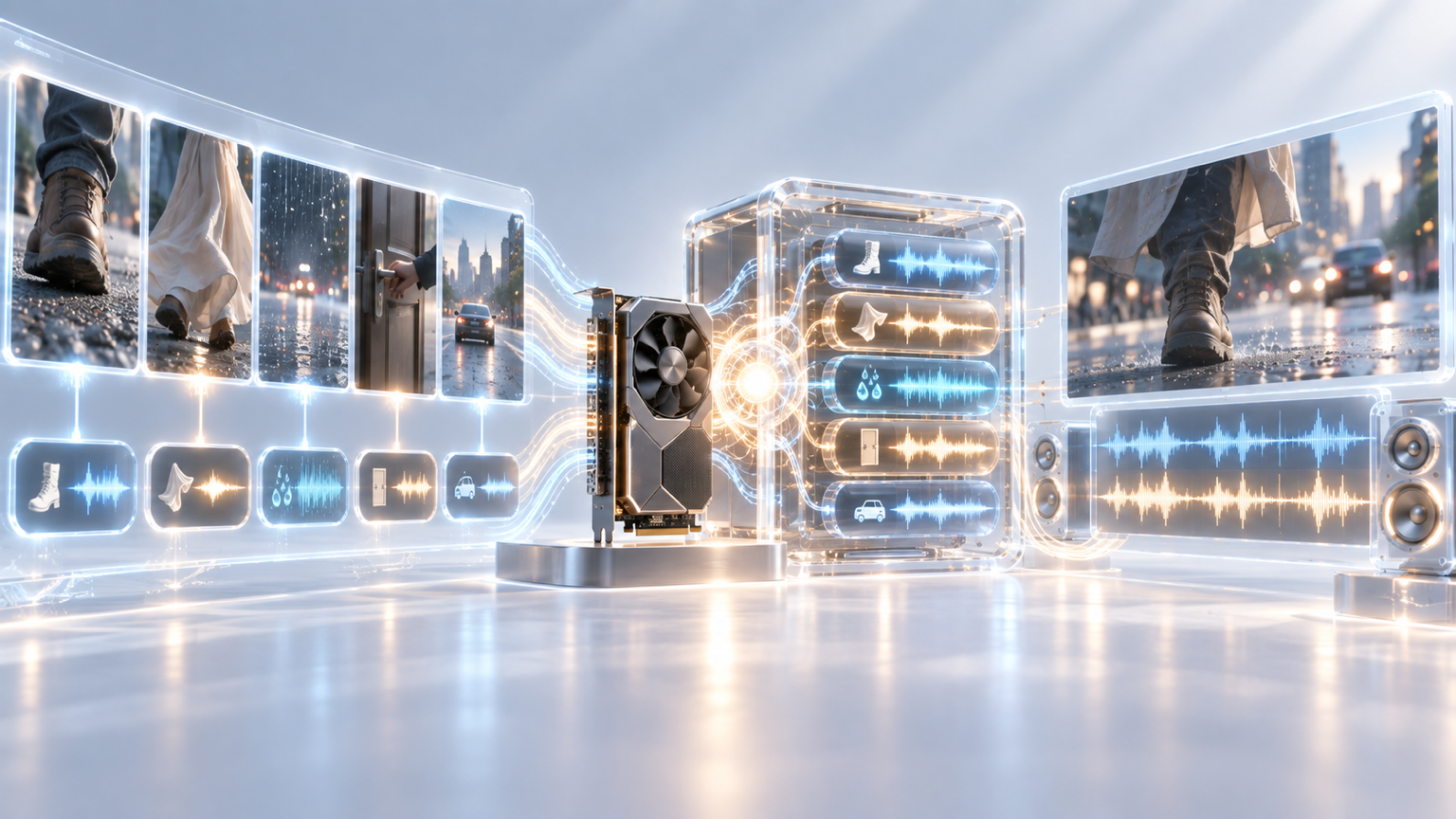 AI Foley on a Budget Card: HunyuanVideo-Foley Generates Sound From Picture
HunyuanVideo-Foley takes silent video and generates matching sound effects and ambience, and can run under 4GB VRAM with block swap. Here is where it fits next to music and lip-sync tools.
 The Launch-Flag Field Guide: Community Command-Line Hacks for Low VRAM
Beyond block swap and GGUF, a second layer of VRAM control lives on ComfyUI's command line. Here is what the widely shared flags actually do, including where current defaults have moved.
 Sixty Seconds on Six Gigabytes: FramePack and Tiled Decoding for Long Low-VRAM Animation
Most low-VRAM tricks shrink the model. A FramePack architecture-animation workflow shrinks the duration problem, generating up to 60-second camera moves from a still on 6GB VRAM.
 When a Troubleshooting Skill Trusts the Internet: A Security Lesson From a Flagged Agent
A community ComfyUI troubleshooting skill fetches GitHub Issues and Reddit, then suggests git clone and model downloads. That is a real untrusted-content risk, even when a scanner currently rates it low.
 How to Run a 744B-Parameter Model on Hardware You Already Own: A Colibrì Walkthrough
Colibrì runs GLM-5.2, a 744-billion-parameter Mixture-of-Experts model, on a 12-core laptop with 25GB of RAM and no GPU by streaming experts from disk.
 Disk Is the New VRAM: The Expert-Streaming Trend Colibrì Belongs To
Colibrì is the visible example of a wider pattern: tools that treat fast NVMe as a planned inference memory tier, not swap of last resort.
 The Hacker News Verdict: What Colibrì's Community Actually Learned
Colibrì's Show HN post hit the front page and climbed past 850 points with more than 200 comments. Here is what people found running it on their own hardware.
 NVMe Bandwidth Is the Quiet Bottleneck Nobody's Pricing In
This year's hardware conversation has been GPU and memory. Colibrì's own numbers point at a quieter bottleneck for hardware-constrained AI work: storage bandwidth.
 ComfyUI Ships Official Agent Tooling — and a Community Project Bows Out Gracefully
Comfy-Org has shipped official Comfy Agent and Comfy MCP tooling. A widely used community MCP server is archiving itself in response on 9 October 2026.
 DLSS 5 in the Graph: An Experimental Neural-Rendering Node for ComfyUI
An experimental ComfyUI node runs NVIDIA DLSS 5 Neural Rendering in-process via a D3D12 bridge, enhancing frames without leaving the graph.
 From Graph to Script: VibeComfy Turns Workflows Into Editable Python for Agents
VibeComfy translates ComfyUI workflow JSON into editable Python for CLI coding agents, paired with Hivemind, a community knowledge base of workflow patterns.
 The Local LLM Node Is Quietly Everywhere: Agentic Building Blocks Inside ComfyUI
Local and remote LLM nodes have become a standard building block inside ComfyUI workflows, driving prompts, routing decisions, and multi-step agent logic in the graph.
 The Long Tail Matters: How Community Nodes Became ComfyUI's Real Advantage — and Its Real Risk
This week a provenance node, a speed checkpoint, a prompt parser, a distillation adapter and a chained-video workflow all came from the community, not Comfy Org. That is ComfyUI's advantage, and its risk.
 Where ComfyUI-Based Pipelines Sit in the 2026 AI Creative Platform Landscape
A 2026 roundup ranked the best AI creative workflow platforms on depth and model flexibility. Here is where a ComfyUI-based studio pipeline actually sits against hosted apps.
 MiniMax Music 3: Five-Minute Songs, Open Weights, and What It Means for Studio Soundtracks
MiniMax Music 3 generates full songs up to five minutes from lyrics and a description, with open weights and 32kHz stereo output. Here is what that means for studio soundtracks.
 Community Distillation: Squeezing a Frontier Model Into an 11MB Adapter
An independent project distilled SenseNova U1.5 semantics into MiniMax H3's conditioning space as an 11MB adapter. That file size is the point for pipeline storage.
 Wan Animate 2: Drop Any Character Into Any Performance, No Skeleton Required
Wan Animate 2 transfers motion from a driving video onto a reference character with no skeleton extraction, and can swap a character into footage while keeping lighting and camera.
 Unlimited-Length Lip-Synced Video on a 12GB GPU: Inside the Endless MiniMax H3 Workflow
Endless MiniMax H3 chains Motion Context with a latent-saver node for unlimited-length, lip-synced video on a 12GB GPU. Here is how the chain works and what to check.
 Parsing Prompts as Code: The AST-Based Prompt Node and What It Means for Reproducibility
Expert Text Prompt parses ComfyUI prompts as an AST: weighted wildcards, prompt groups, inline mute and solo. Treating prompts as structured code helps a studio reuse them.
 Faster-Than-Real-Time, Again: OpenVDN's Hybrid Attention Checkpoint for MiniMax H3
OpenVDN's Video DeltaNet checkpoint runs a 14.4-second 768p MiniMax H3 clip in 8 denoising steps, with a community ComfyUI port already live.
 Provcheck: An Offline C2PA Watermarking Node Lands in ComfyUI
Provcheck v1.4.0 brings offline C2PA signing into ComfyUI. Neural watermarks and Content Credentials become a pipeline step, not a post-process to remember.
 From Tool to Team: The AI Creative Suite Is Converging — Studios Still Need a Pipeline
The all-in-one AI creative suite is converging fast. It is a superb tool for one artist, and a reminder of everything a studio pipeline adds that an app cannot.
 The Abliterated-Model Question: Uncensored Weights and Studio Liability
Uncensored open models are a click away in the new all-in-one apps. For a studio, using them on client work is a liability question worth thinking through.
 Content Controls and Review Gates for a Generative Pipeline
Generative models can produce off-brand or unsafe output. Build content controls and review gates into a studio pipeline before work reaches a client.
 The Finishing Line: Interpolation, Upscaling and Grade for AI Motion Output
Generation is the middle of the job, not the end. Interpolation, upscaling, grade and delivery-spec are what make AI motion client-ready.
 Beyond the Pretty Demo: Benchmarking Generative Models for Production
The model with the prettiest five-second demo is not automatically the best production model. Evaluate generative models against a real studio workflow.
 Taming Model Sprawl: Managing Terabytes of Checkpoints Across a Studio
Model sets run to hundreds of gigabytes each. Across a studio that is terabytes of sprawl. Manage checkpoints, LoRAs and custom nodes without chaos.
 Where Your Renders Live: Data Residency and Sovereign Cloud for AI Studios
For European studios and regulated clients, where a render physically happens is a legal question. Here is what data residency means for a generative pipeline.
 Case Study: One Control Plane Across Five Providers
A composite case study: a studio running owned GPUs, two clouds and two API model providers behind a single governed control plane.
 Case Study: Migrating a Campaign Off a Deprecated Model Without Reshooting
A composite case study: how a studio moved a live campaign off a retiring video model without re-creating every shot from scratch.
 Stand Up a Headless ComfyUI Render Service with a Queue and Dashboard
Running ComfyUI as a shared studio service, not a desktop app, means going headless with a real queue and dashboard. Here is the shape of it.
 Train a Video LoRA That Holds a Character Across Shots
Character drift across shots is a top production headache. A video LoRA trained on motion, not frames, fixes it. Here is the approach.
 Build a Per-Shot Model-Selection Matrix to Control Cost
Different generative models win at different jobs and cost wildly different amounts. Build a selection matrix that routes each shot to the right one.
 Keep Your Prompts Model-Agnostic (So a Sunset Never Kills Your Pipeline)
When a model gets deprecated, portable prompts save your pipeline. Write video prompts that survive a model swap.
 Choosing an Open-Source Video Model: HunyuanVideo vs LTX vs Wan vs Mochi
The open-source video field has real range, from cinematic heavyweights to consumer-card lightweights. Here is how to choose for a studio pipeline.
 Apple's Quiet Play: M5, Unified Memory and MLX for Generative Video
In a year of scarce NVIDIA cards, Apple's M5 Macs and the MLX framework are a real alternative for generative video. Here is where they fit, and where they do not.
 The Universal Connector: How OpenAI-Compatible APIs Quietly Standardised Generative AI
The OpenAI-compatible API has become the de facto connector between tools and models. That wire format is what makes provider independence a realistic studio plan.
 Sora's Sunset: The Cloud Video-Model Reshuffle Studios Need to Plan For
OpenAI's Sora API retires 24 September 2026. Here is the current cloud video-model landscape and why a studio should never be locked to one.
 Everything in One App: Unsloth Desktop and the All-in-One Local+Cloud AI Studio
A new class of downloadable app does video generation, editing, model training and both local and cloud models with any provider. Here is what it is, and where a studio still needs more.
 The Update That Broke Everything: ComfyUI Version Fragility and Why Studios Pin
If you run ComfyUI in production, you have probably learned that "just update" is not a safe instruction. 2026 offered a steady drumbeat of updates that broke working setups.
 The Real Cost of a Render: FinOps for a Generative Studio
In 2026 a generative studio pays for compute in three fundamentally different currencies at once, and confusing them is how render costs quietly get out of control.
 One Node, Whole Soundstage: Native Audio and Lip-Sync with MiniMax H3
Until recently, sound was something you bolted onto a generated clip after the fact. MiniMax H3 collapses that chain: video with native stereo audio, voice, SFX and music, in one pass, with lip-sync.
 From Prompt to Prop: 3D and World Generation in ComfyUI for Motion Graphics
Generative AI in ComfyUI started with images, moved to video, and is now reaching into three dimensions. Here is how image-to-3D and world models fit a motion-graphics pipeline, and where they do not yet.
 The Agentic Graph: Building and Debugging ComfyUI Workflows with Copilot
ComfyUI-Copilot has grown from a helper into an agent that builds, debugs and rewrites workflows. Here is what it does, and what a studio still has to govern.
 Train Your Own Look: In-House LoRAs for Brand and Character Consistency
A generic model cannot hold your client's character or house style across a campaign. In-house LoRA training can. Here is the workflow, the costs, and where the compute goes.
 Watermarks Are Now the Law: EU AI Act Article 50 and Provenance in Your Pipeline
From August 2026, the EU AI Act requires AI-generated content to be machine-readably marked. Here is what SynthID, C2PA and Article 50 mean for a generative studio's pipeline.
 The ComfyUI Speed Stack: SageAttention, TeaCache and torch.compile
SageAttention, TeaCache and torch.compile can stack to a 3–5x ComfyUI speedup if you can get them installed and keep them stable. Here is what each does and where they bite.
 A Hybrid Local+Remote Motion Workflow: What to Keep Home, What to Send Out
Put together open models on local GPUs, heavy nodes you can send to remote compute, and frontier models arriving as API partner nodes, and the modern ComfyUI motion workflow is a routing problem.
 Case Study: Keeping the Graph Local and Bursting Only Two Nodes
A small motion studio had a specific, annoying problem. Their ComfyUI workflow for a client's animated spots ran fine on their own cards, right up to two nodes.
 Multi-GPU in ComfyUI: What Distributed, MultiGPU and NetDist Actually Do
"Just use multi-GPU" is common advice for ComfyUI capacity problems, and it hides a lot of confusion, because the popular extensions labelled multi-GPU solve three different problems.
 Open Weights on Your GPU vs Closed APIs in the Cloud: 2026's Two-Track Reality
ComfyUI in 2026 runs on two tracks at once: open-weight models on hardware you control, and closed frontier models behind APIs, arriving as partner nodes.
 Nano Banana Pro Lands in ComfyUI: Studio 4K and the Partner-Node Era
Google DeepMind's Nano Banana Pro (Gemini 3 Pro Image) is now in ComfyUI. It targets production-ready visuals: native 4K, clean text, character consistency, and a partner node on Google's infrastructure.
 Why Scheduling ComfyUI Nodes Across Local and Cloud GPUs Is So Hard
Sending each ComfyUI node to whatever GPU is free sounds simple. It is not. The execution model, model-switch cost, data locality and mixed VRAM make node scheduling across local and cloud genuinely hard.
 Running Individual ComfyUI Nodes on Remote Compute While Your Workflow Stays Local
Most people treat ComfyUI in the cloud as all-or-nothing: the whole workflow on your machine, or the whole thing on a rented GPU. There is a middle path: keep the graph local and send only the heavy nodes out.
 Local AI Grew Up: DGX Spark, Unified Memory and the New Studio Baseline
For two years the assumption was that serious generative work meant the cloud, and local ComfyUI was where you prototyped before renting real horsepower.
 Distilled and Parallel: How FastH3 and Multi-GPU Are Rewriting Video Render Economics
Two developments are pulling video render costs down at the same time, and together they change how a studio should plan capacity.
 The Malware Is Inside the Workflow: ComfyUI's Custom-Node Supply-Chain Problem
ComfyUI's custom-node ecosystem is huge, open, and anyone can publish. In 2026 that same openness became a production security problem.
 The 2026 GPU Squeeze and What It Means for ComfyUI Motion Studios
If you have tried to spec a new render node this year, you already know the headline: the graphics card you budgeted for costs roughly twice what it should, assuming you can find it in stock.
 How to Lock Down a Production ComfyUI Instance: A Studio Security Checklist
If ComfyUI is in your production pipeline and you handle client material, treat it like production software. Work this checklist.
 NVFP4 and FP8 Land Natively in ComfyUI: The New VRAM Math
ComfyUI now supports NVFP4 and FP8 natively. The number format the models run in now determines how much VRAM a motion studio actually needs.
 How to Standardise Team Workflows with ComfyUI Subgraphs
Subgraphs are now a stable ComfyUI feature. For a studio they are a standardisation tool: a complete workflow section packaged as a reusable super-node.
 No New Consumer GPU in 2026: The End of "Just Buy More Cards"
Something happened in 2026 that has not happened in roughly three decades: NVIDIA shipped no new consumer GPU architecture.
 How RenderBob gives an exact quote before you render
Most farms bill after the fact. RenderBob prices Blender jobs up front so you can quote a client, hit submit, and know the euro amount will not move.
 Unified Memory vs Discrete VRAM: Why the Memory Model Decides Your Render Strategy
Generative rendering in 2026 is decided by the memory model. Gigabyte count is the wrong question.
 Video Models Keep Getting Heavier: LTX-2.5, Wan 2.2 and MiniMax H3 vs Your VRAM
The pace of new video model support in ComfyUI has been relentless. Recent releases and node updates have brought FLUX.2 Klein, LTX-2.5 (including the LTX Ripple first-frame IC-LoRA), Wan 2.2, MiniMax H3 and…
 Case Study: An Air-Gapped ComfyUI Pipeline After the Registry Couldn't Be Trusted
A producer noticed one of the studio's render machines running hot overnight with no job queued. The custom node that caused it forced a rebuild of how ComfyUI ran in production.
 How to Kill CUDA OOM on Wan 2.2 and LTX-2 Without Buying a 5090
Out-of-memory errors on video workflows are the single most common ComfyUI complaint of 2026, and most of them are solvable without new hardware. Work this list in order before you reach for a credit card.
 A Distillation-First Motion Workflow: Iterate Local, Finish on Burst
A four-step distilled model and a full-quality parent should not share the same jobs. Use them in sequence.
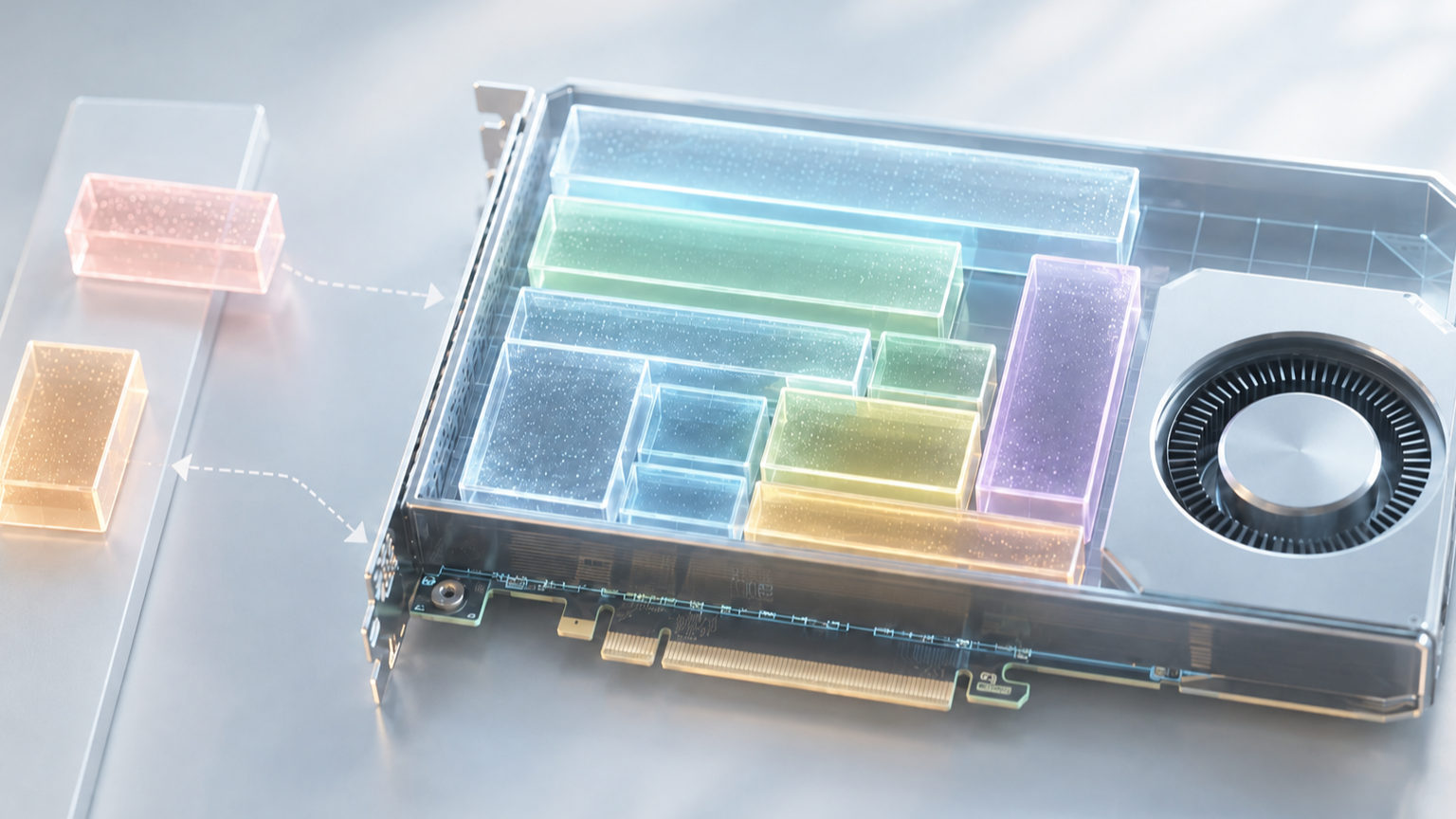 How to Build a VRAM Budget for Motion Graphics Workloads
Most studios size hardware by vibes: buy the biggest card the budget allows and hope. In a year when the biggest card costs $5,000 and may not be in stock, guessing is expensive. Size the farm to the jobs you actually ship.
 Personal AI Routers and the Studio Version of Multi-Device Inference
NVIDIA's PAIR routes inference across a person's devices. Scaled up, that is the same job a studio render control plane has to do.
 Building an Approved Node and Model Registry for a ComfyUI Studio
Two of the biggest risks in a production ComfyUI studio, security and licensing, share one fix: a governed registry of approved nodes and models.
 How to Add Cloud Burst to a ComfyUI Pipeline Without Rewriting Workflows
The promise of a local+cloud expansion pipeline is simple: baseline load on owned hardware, peaks on rented cloud nodes, and artists who never have to think about which is which.
 How to Make a ComfyUI Workflow Reproduce on Every Artist's Machine
"It works on my machine" is a punchline in software and a genuine crisis in a ComfyUI studio.
 Case Study: The 12-Artist Studio That Stopped Buying GPUs
A twelve-person motion studio walks into Q3 2026 with a problem every studio recognises: three overlapping campaign deliveries, a ComfyUI-heavy video pipeline, and a render queue that is full for the entire…
 Case Study: A Hero Shot from 9 Hours to 40 Minutes with Hybrid Rendering
Every motion studio has the shot. The one at full resolution, full length, with the upscale pass and the LoRA stack, that turns a single workstation into a space heater and does not finish until the following…
 Case Study: When One 4090 Workflow Broke on Everyone Else's Machine
The workflow was beautiful. A senior artist had spent two days tuning a ComfyUI video pipeline: a specific model version, a couple of custom nodes, a LoRA stack, precise sampler settings. Then they handed it to the rest of the team.
 Case Study: Shipping an NDA Campaign When Cloud Was Off the Table
A studio wins a campaign for a client whose legal and security terms are unusually strict: unreleased IP, a streamer or games publisher, the kind of brand whose material cannot leave controlled infrastructure.
 Why ComfyUI Runs Out of Memory: Pinned Memory and Offloading Explained
When a ComfyUI video job dies with a CUDA out-of-memory error, the instinct is to blame the GPU. Often the real story is more subtle, and understanding it turns a mysterious crash into a solvable one.
 Burst rendering to the cloud without the guesswork
Deadlines do not care that your local GPUs are already full. Burst-to-cloud only works if the quote is locked, the scene is preflighted, and the first frame actually arrives.
 VRAM vs System RAM vs Disk: The Memory Hierarchy Behind a Video Render
Every ComfyUI video render is a negotiation between three tiers of memory, and knowing how they interact explains most of what feels random about performance.
 Anatomy of a Control Plane: Turning Owned GPUs into a Managed Farm
A room full of GPUs running ComfyUI is a pile of powerful, uncoordinated machines. The layer that turns the pile into a farm is the control plane.
 GDDR7, HBM and the Memory Shortage Behind Your Render Queue
Your ComfyUI render queue is full partly because of a decision made in a memory fab you will never see. The 2026 GPU shortage is a memory shortage, and tracing the chain explains why it is stubborn.
 An AI-Augmented Motion Graphics Pipeline: C4D to ComfyUI and Back
The most interesting motion work in 2026 blends classical layout and control from tools like Cinema 4D with generative texture, style and video passes from ComfyUI, then composites them back together.
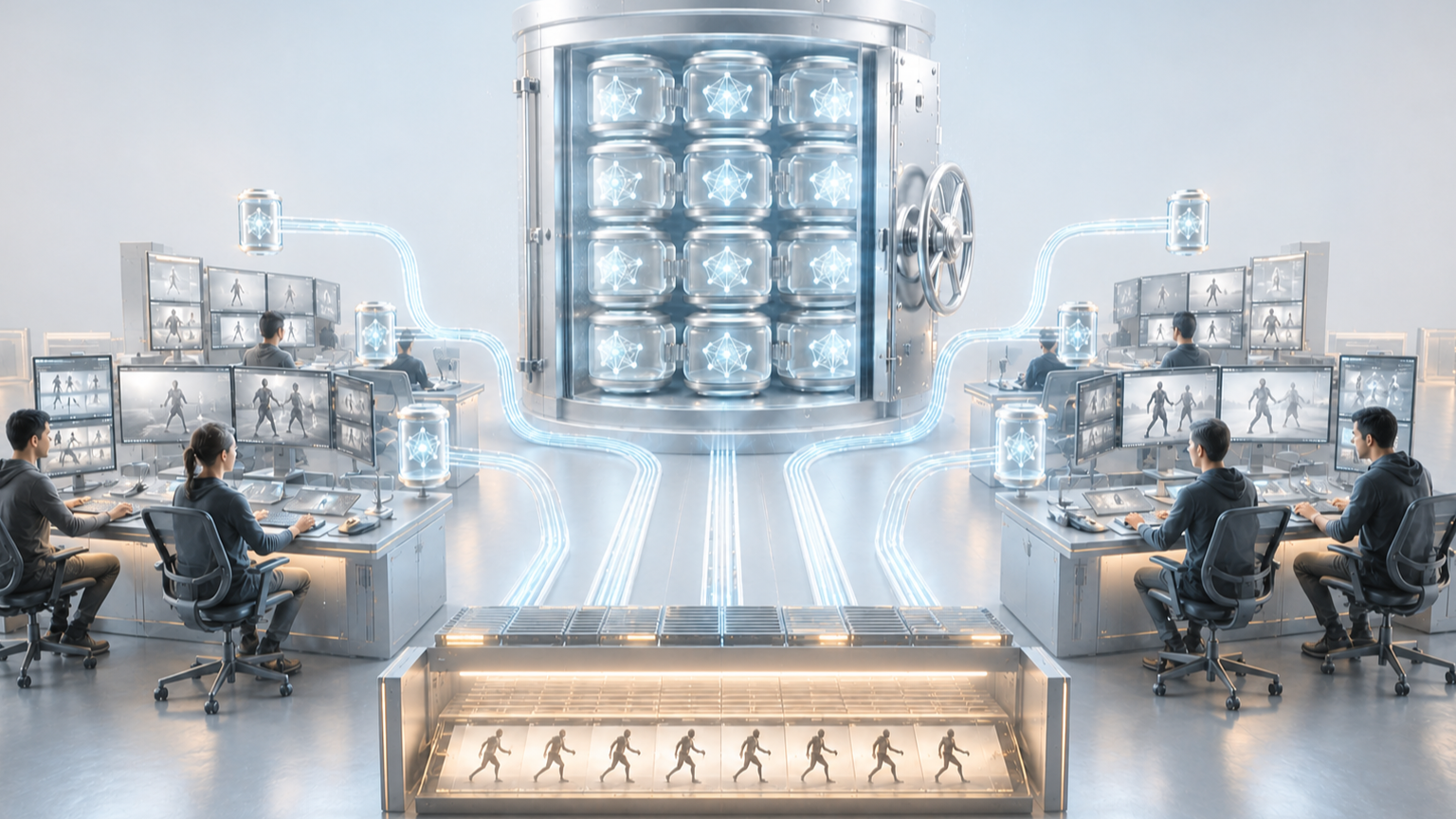 A Reproducible Team Workflow: Registries, Pinning and Shared Queues
Single-seat ComfyUI is simple: one machine, one models folder, one artist who remembers what they did. That simplicity breaks at the second user. This blueprint is built to survive a team.
 Designing Graphs That Split Across Local and Cloud Nodes
A workflow that can only run as one monolithic job on one machine wastes the biggest advantage of a hybrid pipeline: the ability to spread work across many nodes at once.
 The Overflow Rule: Deciding What Renders Local vs Cloud
Without a clear rule, "should this run local or cloud?" becomes an artist's judgement call at 9pm on a deadline, and judgement calls under pressure are inconsistent and expensive.
 What to look for in a cloud render farm
Hardware lists look the same in every deck. The differences that show up on a deadline are pricing clarity, pipeline fit, and whether you can see the job before it finishes.