Technical
GDDR7, HBM and the Memory Shortage Behind Your Render Queue
· RenderBob team
Your ComfyUI render queue is full partly because of a decision made in a memory fab you will never see. The 2026 GPU shortage is a memory shortage, and tracing the chain explains why it is stubborn.
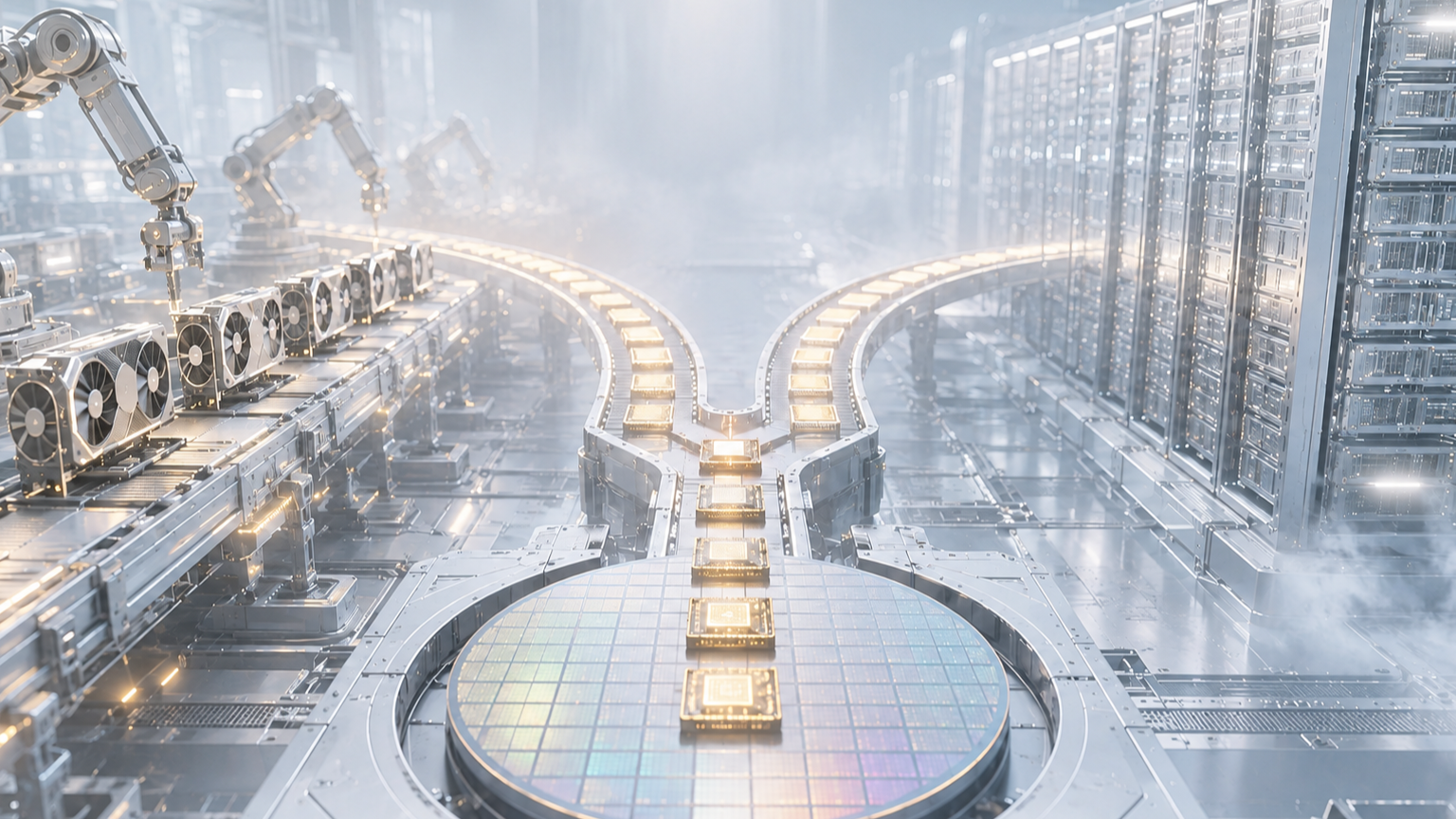
Your ComfyUI render queue is full partly because of a decision made in a memory fab you will never see. The 2026 GPU shortage is a memory shortage, and tracing the chain explains why it is stubborn.
Modern high-end GPUs are dominated by their memory. On a top card, memory can account for as much as 80% of the bill of materials. The consumer cards studios rely on use GDDR7; the data-centre accelerators powering the AI boom use high-bandwidth memory (HBM). Both are made by the same handful of manufacturers, Samsung, SK Hynix, Micron, from the same finite wafer capacity.
AI data-centre demand for HBM is effectively unlimited and extremely profitable, so memory makers have allocated wafer capacity toward it, leaving less for the GDDR7 that goes into consumer graphics cards. Less GDDR7 supply means fewer high-VRAM consumer cards, which means the RTX 5090 trades at two to three times MSRP and the higher-VRAM Super refresh, which needed even denser GDDR7, was shelved because the memory to build it did not exist to spare. Meaningful relief is not expected until 2027–2028, when new memory fab capacity comes online, and even that will be partly absorbed by the next data-centre generation.
There is a second-order effect that hits creative studios specifically. Because a 32GB consumer card at MSRP is a bargain next to a workstation or data-centre part, AI buyers snap up consumer high-VRAM cards the moment they hit retail, pulling supply away from the gaming and creative market the cards were built for. The studio trying to buy a render card is competing with gamers and with the entire AI industry for the same silicon.
If the memory shortage lasts into 2027–2028, a plan built on regularly buying more high-VRAM cards is a plan built on a supply that may not be there. Reduce dependence on owning ever more VRAM: extract more from existing cards through quantization, and make capacity elastic so peaks are served by rented cloud nodes rather than by cards you cannot reliably purchase.
None of this means owning hardware is wrong. Owned capacity is still the cheapest way to serve steady load. It means the shortage has quietly changed the odds, and the studios that hedge with elasticity are the ones a bad quarter of memory pricing cannot take off schedule.
More from the blog
- Human Authorship Is Becoming the Unit of Value
The Oscars' 2026 AI rules, Cannes' unpublished competition stance, a patchwork of festival policies, and the Thaler copyright denial all ask how much of a film a human authored.
- Ideation Is the Green Zone: Where Studios Allow AI and Where They Stop
Netflix's generative AI guidance for production partners treats concept work as the open case and final deliverables as the restricted one. That split is spreading as a working template.