Technical
The Transcript Layer: Why Captions, Search and Rough Cuts All Start With Speech-to-Text
· RenderBob team
Rough cuts, search, captions, and dubbing all depend on an accurate transcript. New Microsoft models add a cloud option beside local Whisper.
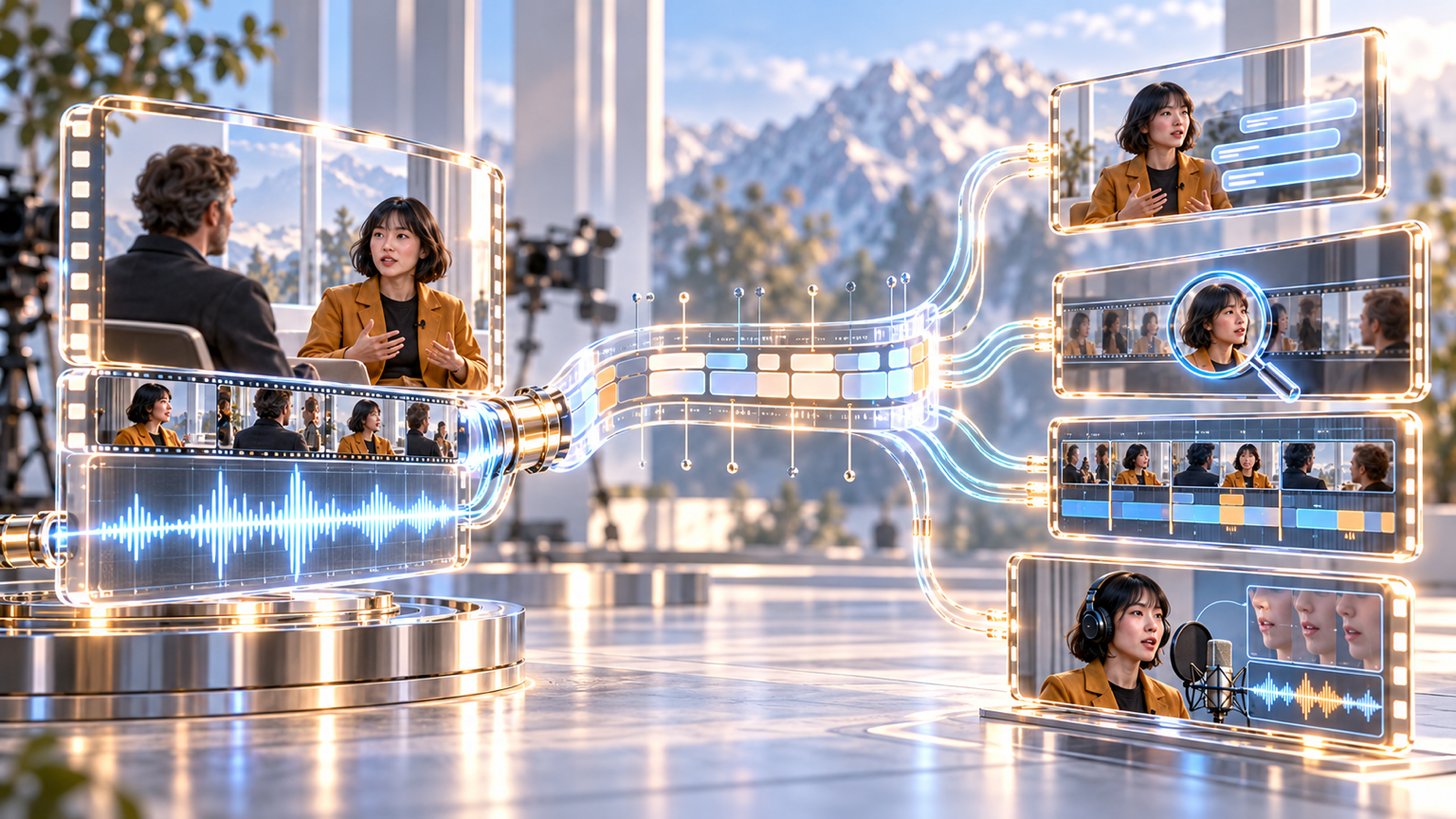
Look under almost any AI editing feature and you find a transcript. Rough cuts assembled from interviews, searching footage by what people said, burned-in captions, translations, and dubbing all start with turning speech into text with accurate timecodes. The transcript is the base layer of AI-assisted editing, so the quality and the location of that layer deserve a decision.
New options
On 1 October 2026 Microsoft released MAI-Transcribe-2-Streaming, a streaming speech-to-text model covering 60 languages with continuous language detection, at an introductory $0.54 per audio hour. It also released MAI-Voice-2.1, a text-to-speech model with 23 languages and 26 locales that keeps one voice across languages, plus a Flash version for which the vendor states 150 milliseconds end to end. Editors already have other routes. Final Cut Pro's Generate Captions runs on Apple silicon and is limited to US English. Local plug-ins use OpenAI's Whisper large-v3 for word-level timestamps on the user's own machine, which avoids uploading footage.
Language coverage
A built-in tool limited to one language is fine for a domestic edit and useless for an international documentary.
Privacy
Cloud transcription means uploading raw interviews. Local models keep material on the machine, which many clients require.
Latency and cost
Streaming models suit live and fast-turnaround work. Batch jobs can wait. Per-hour pricing is cheap for occasional use and adds up across a large archive.
Names and jargon
Every model struggles with proper nouns and specialist vocabulary, so plan a correction pass.
Treat the transcript as a project asset
Store it with timecode alongside the footage, correct proper nouns once, and reuse it for search, captions, rough cuts, subtitles, and translation. Re-transcribing for each task wastes money and produces inconsistent versions.
Voices across languages
A model that keeps one voice across languages points at localisation workflows where a narrator or character sounds the same in each market. That brings the consent questions from voice cloning with it. Use only voices you have the right to use, and record the permission with the project. Visual dubbing, which changes on-screen mouths to match dubbed audio, adds a picture-side version of the same issue.
General information on consent and voice use, not legal advice.
Suggestive editing starts here
Tools that propose a story structure from interviews are working from transcripts, so errors upstream become errors in the suggested cut. Fixing the transcript is the cheapest quality improvement available.
What to watch
Accuracy on accents and overlapping speech, on-device models that match cloud quality, and whether editors can carry one corrected transcript between applications.
More from the blog
- Nano Banana 2.1: 14 References, Three Thinking Levels, and Targeted Edits for Storyboards
Google's Nano Banana 2.1 accepts up to 14 reference images and adds a medium thinking level. Artlist also describes edits that change a named area instead of redrawing the frame.
- Odyssey-3 and Interactive World Models: What They Are, and What They Are Not Yet Good For in Production
Odyssey opened a public research preview of Odyssey-3 on 8 October. You move through a generated scene, which is a different planning job from ordering a finished clip.