Technical
Odyssey-3 and Interactive World Models: What They Are, and What They Are Not Yet Good For in Production
· RenderBob team
Odyssey opened a public research preview of Odyssey-3 on 8 October. You move through a generated scene, which is a different planning job from ordering a finished clip.
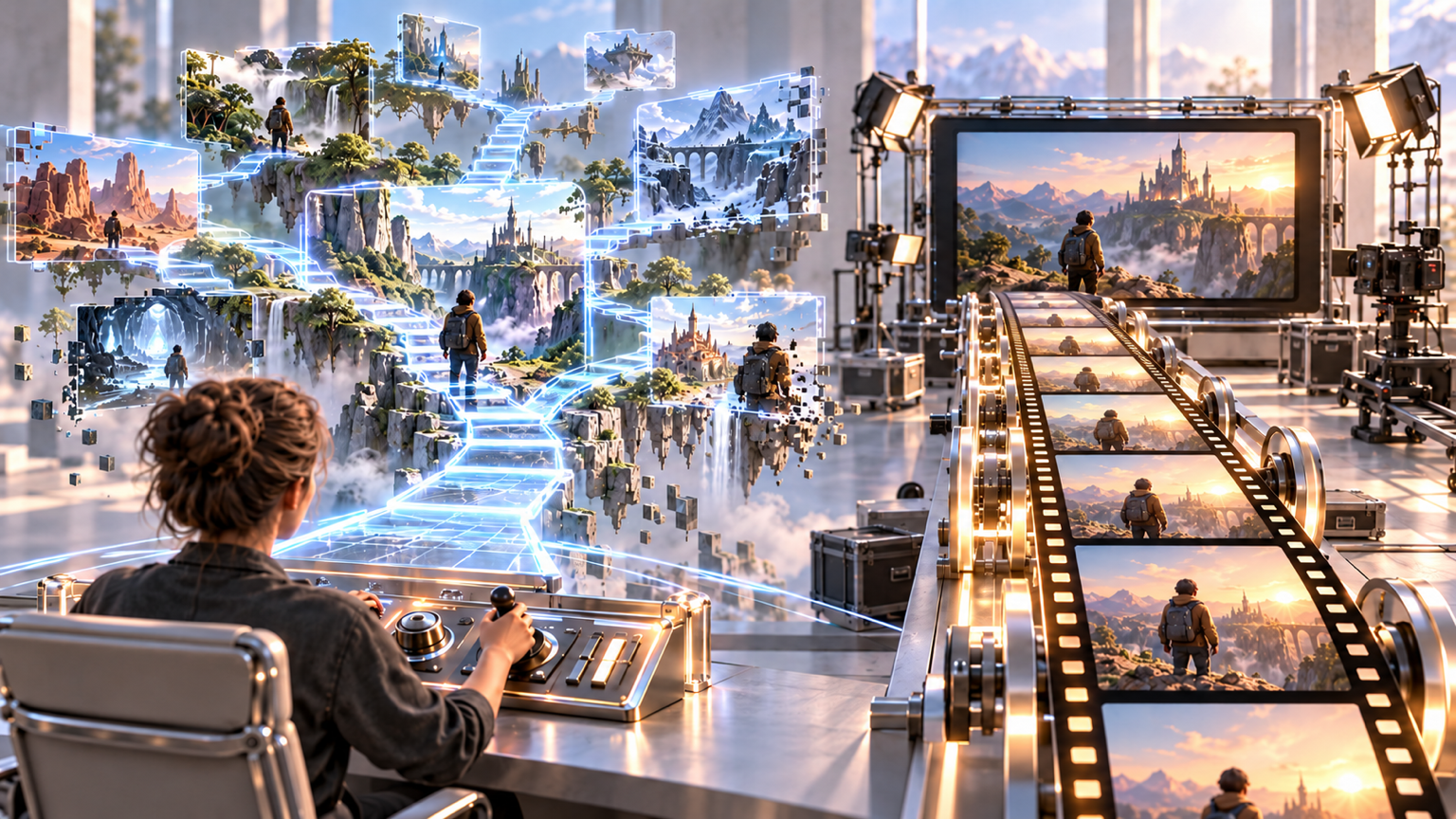
Odyssey opened a public research preview of Odyssey-3 on 8 October. You prompt a scene and move through it while the model keeps predicting what happens next. That is a different planning job from ordering a finished clip.
What it is
Odyssey's launch page, dated 8 October, describes a model that generates a scene from a prompt. You can move through it in first person, third person, or with a free camera. It predicts how the scene changes as you act, and you can add events while it is generating. A distilled few-step variant is what the real-time preview runs on. The preview control is labelled Flash, and the page does not publish a separate specification for that variant. It does list the resolutions used for the published scores: 832×480 for Odyssey-3 and 1280×720 for Pro.
Claims and evidence
Odyssey reports results in robotics, humanoid control, and driving. Those demonstrations are the company's, and we have not seen an independent test. On Physics-IQ Verified, Odyssey says Pro scored 66.1 on the video-to-video board, which it calls the highest reported score, and 54.7 on image-to-video. WorldMark rankings on the same page come from Odyssey's own evaluation. There is no public price, no weights, and API access runs through a contact form.
What to do with this on a production
Today this is a scouting and previs tool. Use it to walk a space, test blocking and camera angles, or build a quick walkthrough. It is a poor fit for a final shot. The published resolutions top out at 720p, the launch page does not say how long a scene stays consistent, and it does not state a price. Treat the output as reference, not as delivery footage.
Before a preview clip goes into a project, read the licence. The launch pages we checked do not state one.
What to watch
Published terms, a self-serve API, higher resolutions, and whether these models start to export camera paths or depth into editing tools.
More from the blog
- Nano Banana 2.1: 14 References, Three Thinking Levels, and Targeted Edits for Storyboards
Google's Nano Banana 2.1 accepts up to 14 reference images and adds a medium thinking level. Artlist also describes edits that change a named area instead of redrawing the frame.
- What a Microdrama Market Size Actually Measures: $7.8B, $11B, $14B and the Gaps Between Them
Our 11 October piece on the microdrama machine cited Deloitte's $7.8B. Other published figures are higher, and they are not directly comparable.