Technical
Nano Banana 2.1: 14 References, Three Thinking Levels, and Targeted Edits for Storyboards
· RenderBob team
Google's Nano Banana 2.1 accepts up to 14 reference images and adds a medium thinking level. Artlist also describes edits that change a named area instead of redrawing the frame.
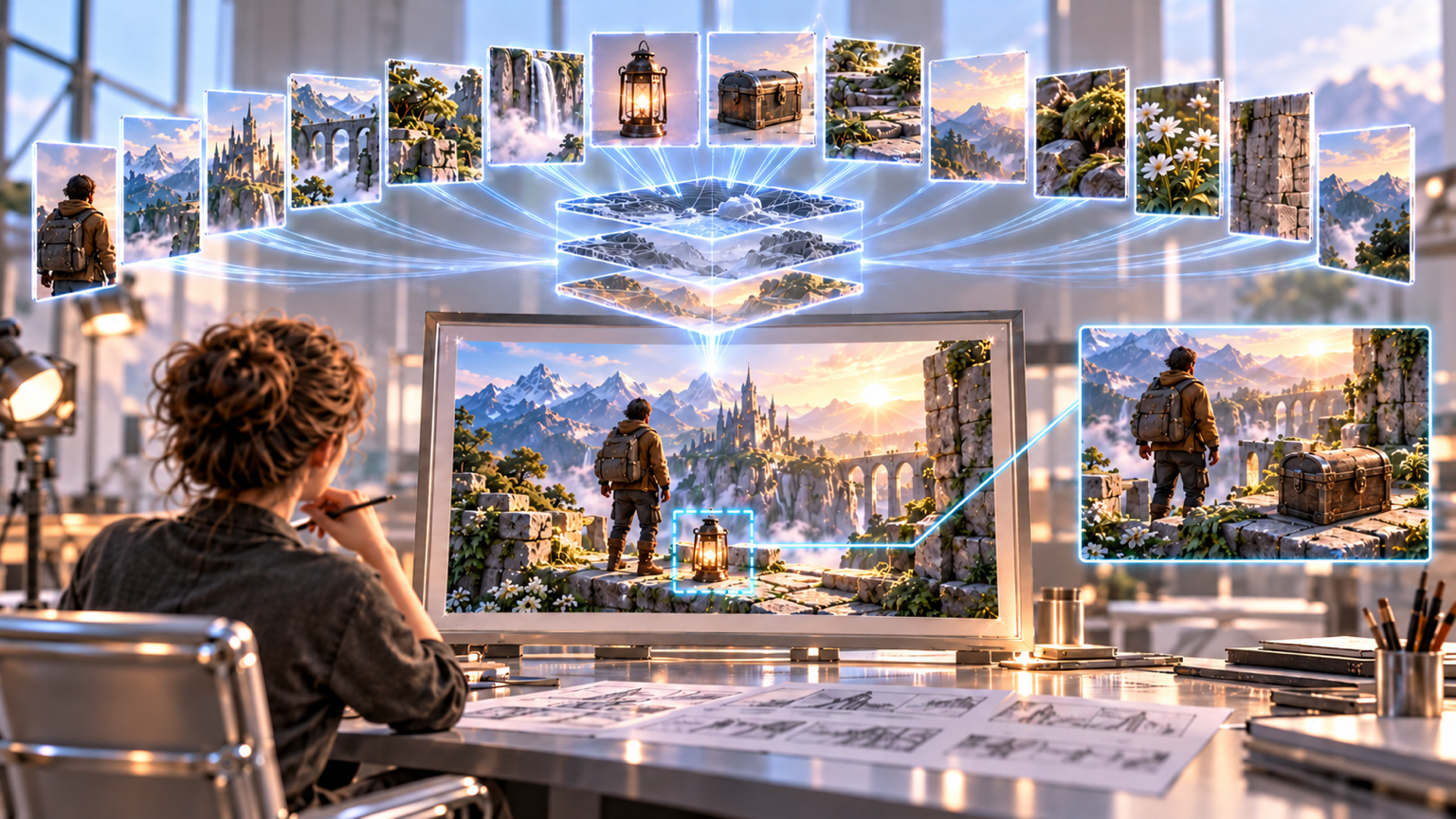
Google's model page lists Nano Banana 2.1 as an October 2026 update. Artlist and Runway's changelog date it to 6 October. It accepts up to 14 reference images, adds a middle thinking level, and, on Artlist's account, edits a described area of an image instead of redrawing the whole thing.
What changed
Google's docs put the limit at 14 references, split into 10 objects and 4 characters, the same split Artlist gives for Nano Banana 2. Output sizes are 1K, 2K, and 4K. Artlist's comparison says the 512px draft size from the earlier model is gone. Google reports fixed tiling artefacts on wide and panoramic formats, including extreme vertical ratios, at 2K and 4K. Thinking levels are minimal, medium, or high, with medium as the default. Google also reports better text rendering and infographic layout, closer prompt following, and steadier characters across rounds of edits. Google's page does not publish a dollar price. It says 2.1 keeps Flash-level speed and cost. The pages we checked do not mention SynthID, so check Google's own provenance notes before you rely on a watermark.
Where it sits in the reference-ceiling table
Our 12 October reference-ceiling piece compared video models. For stills, 14 references is higher than FLUX 3's 10. The limit is what the tool accepts. More references do not guarantee more control. The split matters. Ten slots for objects and four for characters is how Google says the slots are meant to be used.
Why storyboarders should care
Area-targeted editing is the practical gain Artlist describes. You say what to change and what to keep, such as the jacket or a background sign, and the edit is meant to leave the rest of the frame alone. For a storyboard sequence that has to hold a character steady across frames, that is the behaviour to test. Use one character and three shots, edit only the prop in each, and check that the face and outfit stay put. Google's page confirms multi-turn character consistency. It does not spell out the region-edit control in the same words.
Losing the 512px mode removes the cheapest draft size Artlist listed, so quick exploration now starts at 1K.
Using it with video
Stills like these are often the reference inputs for video models. A consistent set of character and location frames from an image model gives the video model cleaner anchors. RenderBob lets you choose local or cloud for each clip, with references and prompt logs staying with the studio.
What to watch
A dollar price from Google, provenance handling, and independent consistency tests across long edit chains. Runway's API changelog does list a credit price for Nano Banana 2.1 on that platform.
More from the blog
- Odyssey-3 and Interactive World Models: What They Are, and What They Are Not Yet Good For in Production
Odyssey opened a public research preview of Odyssey-3 on 8 October. You move through a generated scene, which is a different planning job from ordering a finished clip.
- What a Microdrama Market Size Actually Measures: $7.8B, $11B, $14B and the Gaps Between Them
Our 11 October piece on the microdrama machine cited Deloitte's $7.8B. Other published figures are higher, and they are not directly comparable.