Technical
The Tedium Scorecard: Four Chores, Honest Grades
· RenderBob team
A candid grade for four tedious film chores: ideation, character creation, missing B-roll, and rough-cut editing, based on this month of evidence.
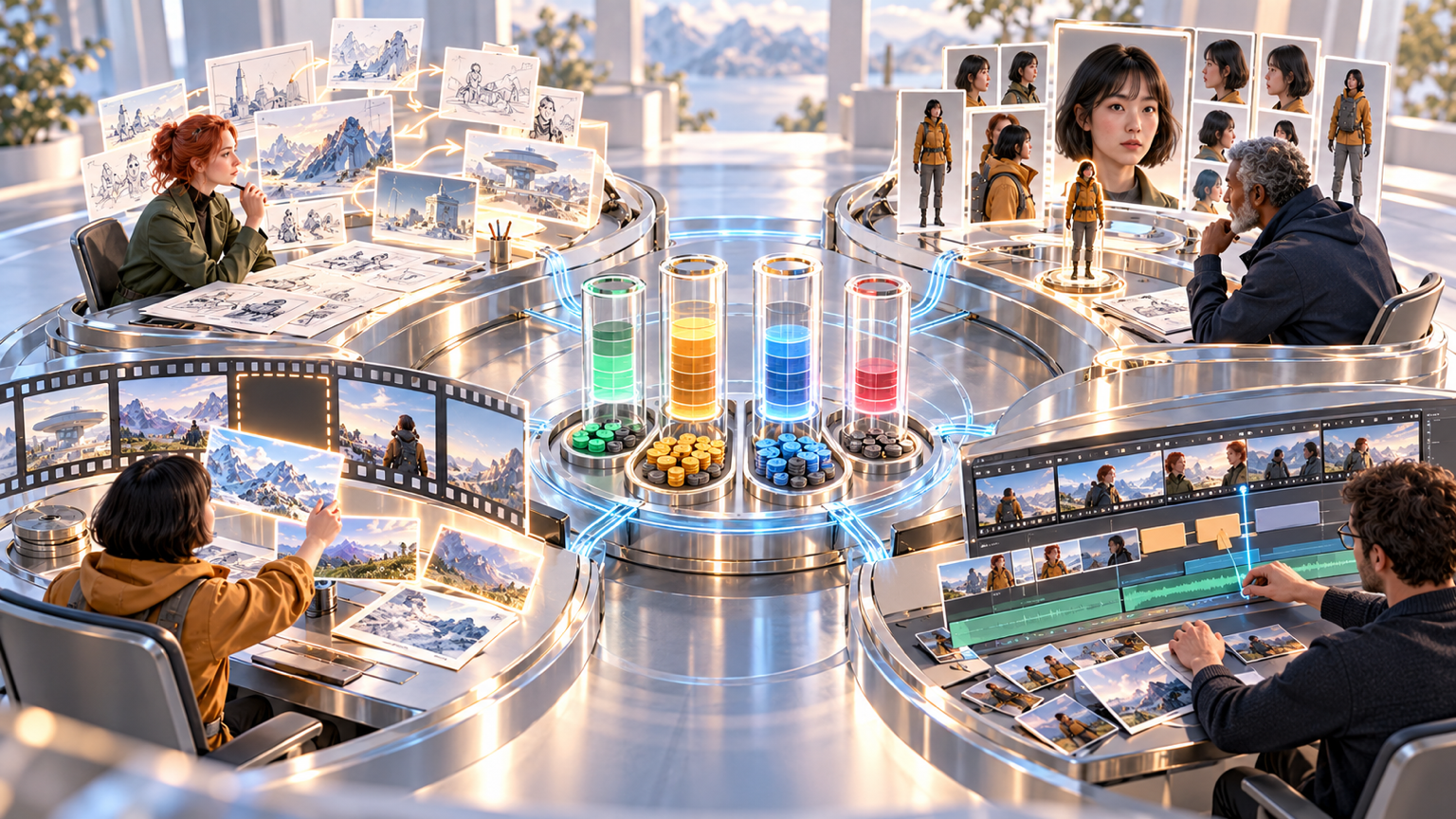
Wyzowl's 2026 survey, run in December 2025, found 63 percent of video marketers had used AI tools to create or edit marketing videos, up from 51 percent a year earlier. Many other statistics circulate online. Several lack a traceable source, so this piece uses that survey and nothing else. The grades below are a judgement from the evidence in this pack and the October filmmaking series.
Ideation: strong
This is the safest and most mature use. Studios treat concept work as the low-risk zone. Tools can break a script into frames in hours. Those are vendor claims, and they are plausible for the mechanical steps. Draft tiers now price exploration for volume. The remaining risk is a model's first idea quietly becoming the film's default. Keep a log of what was generated, and replace references before the final.
Character creation: improving fast, needs supervision
Reference capacity has jumped, with up to 20 assets in Wan 3.0 and up to ten in FLUX 3 Image. Native 30-second takes remove cut points where faces drift. Persistent problems remain: multi-character scenes, style changes, and unreliable adherence to references. Consent and likeness rules apply to anything based on real people, and awards and contracts increasingly look for demonstrably human performances.
Missing B-roll: solved for generic, unsuitable for the real
Atmosphere, texture, and abstraction are easy to generate or find, and editing models can repair shots you already have. Anything that claims to document a real event, place, or person is a different matter. Disclosure rules and stock-library policies draw hard lines there. Also check whether the shot already exists. Semantic search is cutting the cost of looking.
Suggestive editing: useful first drafts
Transcription and slate detection are close to reliable. Story-aware rough cuts exist from several vendors. One editorial estimate puts rough assembly at 60 to 70 percent accuracy. The tools propose a structure and the editor decides. Handoff to a standard editor via XML or a similar format matters as much as the suggestion.
Cost, reliability, provenance, location
- A tenfold price spread means the shot ratio and the model tier matter more than any single rate.
- Models retire on their vendors' schedules, as the Critterz production showed.
- Disclosure duties and human-authorship rules converge on the same habit: document who made what.
- Local processing keeps confidential footage on the machine. Cloud models still lead on the longest, highest-fidelity output.
What the tool should do
A tool that fits this scorecard keeps the cheap passes cheap, leaves the creative decisions with the editor, labels draft and final as different states, and lets the production choose local or cloud per shot. RenderBob is built for that split: references, prompt logs, and approved looks stay with the studio, and a later shot can run on owned hardware or burst to cloud GPUs without the only copy living inside one model vendor.
The grades are an editorial judgement from this series, not a measured benchmark. The 60 to 70 percent rough-assembly figure is an editorial estimate, not a controlled test.
More from the blog
- Nano Banana 2.1: 14 References, Three Thinking Levels, and Targeted Edits for Storyboards
Google's Nano Banana 2.1 accepts up to 14 reference images and adds a medium thinking level. Artlist also describes edits that change a named area instead of redrawing the frame.
- Odyssey-3 and Interactive World Models: What They Are, and What They Are Not Yet Good For in Production
Odyssey opened a public research preview of Odyssey-3 on 8 October. You move through a generated scene, which is a different planning job from ordering a finished clip.