Technical
The Microdrama Machine: What Vertical Series Teach About Fast, Suggestive Editing
· RenderBob team
Vertical short series are the clearest large-scale test of AI-assisted production. Their costs, locked characters, and saturation problem are already visible.
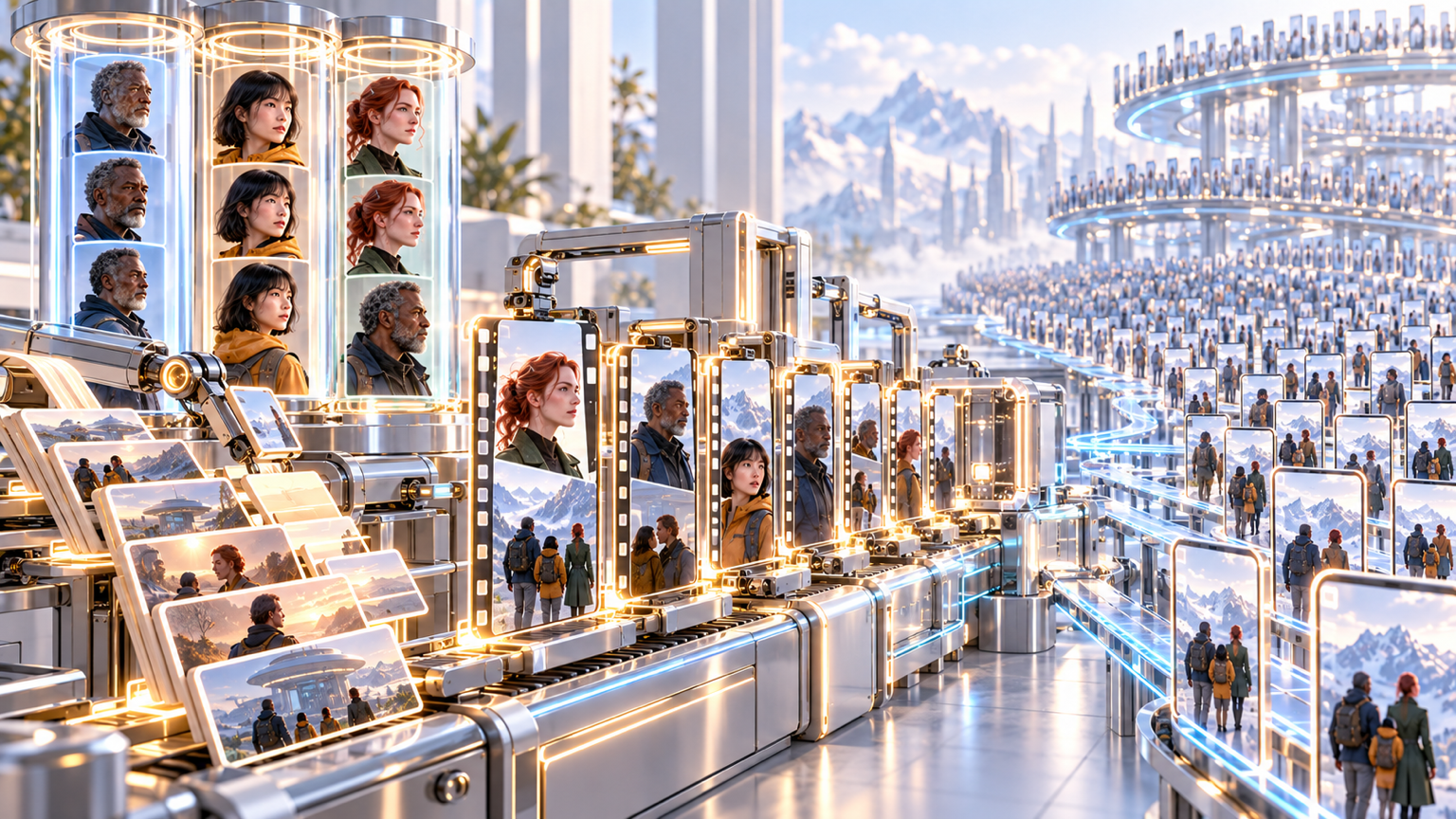
If you want to see AI-assisted production under real commercial pressure, look at microdramas: serialised stories in one- to two-minute vertical episodes, made for phones. Deloitte projects in-app revenue of about $7.8 billion in 2026, more than double the previous year, with ReelShort and DramaBox leading and mainstream companies moving in. Fox has a deal with creator Dhar Mann for 40 vertical series. Peacock is licensing ten from ReelShort. Holywater raised $22 million in January before acquiring an AI visual-effects studio.
The economics driving AI use
The reported figures are striking, and they come from companies and industry commentary. South Korea's Vigloo says an AI-generated vertical drama was finished in six weeks with costs down 90 percent, and its 22-episode English-language series was produced in eight weeks by fewer than ten people. India's Dashverse says an hour of content can cost as little as $20,000 against about $150,000 for live-action vertical series, and planned to scale from 100 series a month in June to 1,000 by year end. Commentary from VML cites over 10,000 AI-generated titles a month in China and an AI share of top charts rising from 7 percent to nearly 40 percent within a year.
Company and trade-press figures, not audited production data. Treat them as indicators.
What the workflow shows
Production guides describe an order that is hard to avoid: a series bible, locked character references, vertical generation, dubbing, then a vertical edit. Producers report spending ten days to a month on scripting and about a month on production, so AI shortens the middle of the process more than the ends. One guide claims per-episode time falls from about six hours to two once references are set. That is a vendor figure, and it shows the logic. Once characters are locked, editing starts to look like assembly: hooks in the first three seconds, burned-in captions because viewers read on-screen text, and a cliffhanger end card.
Where the four chores show up
Ideation is concept-testing at volume. Character creation is the bible. B-roll is synthetic support shots. Suggestive editing means templates, auto-captions, and fast assembly. Every tedious task the industry is trying to automate shows up here at once.
The caution
Saturation is the obvious risk. When anyone can make a series, attention becomes the scarce resource. Practitioners quoted in coverage also worry about whether a human spark survives scale, and whether AI-heavy series will land as well in the West as they have in Asia. Hybrid approaches, with human scenes for emotional truth and AI for planning and expansion, are what several producers describe.
What to watch
Disclosure rules for AI-generated series, and whether platforms start labelling or ranking them differently.
More from the blog
- Nano Banana 2.1: 14 References, Three Thinking Levels, and Targeted Edits for Storyboards
Google's Nano Banana 2.1 accepts up to 14 reference images and adds a medium thinking level. Artlist also describes edits that change a named area instead of redrawing the frame.
- Odyssey-3 and Interactive World Models: What They Are, and What They Are Not Yet Good For in Production
Odyssey opened a public research preview of Odyssey-3 on 8 October. You move through a generated scene, which is a different planning job from ordering a finished clip.