Case study
TV Asahi's Sanada Juyushi Used More Than 1,000 AI-Generated Cuts for Its Ninja Action: What the Producers Say About Mixing AI and Live Action
· RenderBob team
TV Asahi used more than 1,000 AI-generated cuts for ninja action in Sanada Juyushi, a 20 October interview says. Most shots mixed AI with live action and VFX.
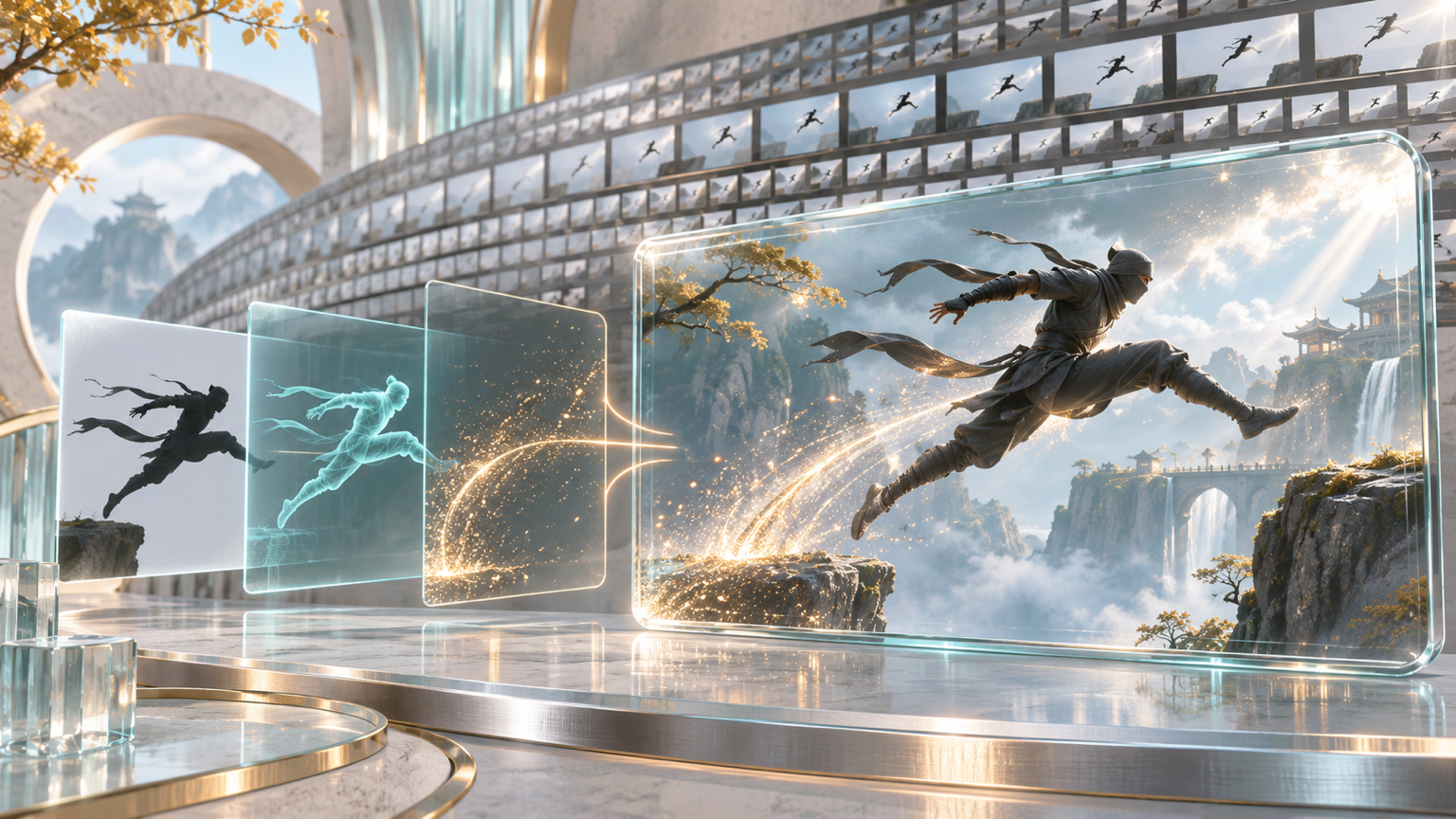
A trade interview published on 20 October describes how TV Asahi built ninja action for Sanada Juyushi with more than 1,000 AI-generated cuts. Fuji TV's 7 November plan sets a target for generative AI in drama. This interview describes a method.
What the interview says
The AdverTimes piece, published on 20 October, interviews producer Takahito Akita and Mayuko Yamaguchi of TV Asahi's AI Strategy Department and AI Creative Studio. We read its first page only. The drama was set to premiere on TV Asahi that month.
- Scale. More than 1,000 AI-generated cuts, which the article calls the largest AI-assisted production TV Asahi has done.
- Timeline. Planning began in May 2025, AI was first considered for the ninja action around November 2025, and serious testing began in December 2025. About four months of test shoots followed before filming began in April 2026.
- Why AI. Flying and jumping scenes usually need wires and cranes that can take half a day and carry risk. AI was expected to produce superhuman movement with less physical strain on actors. Akita argued that because the story is fantasy, physics-defying action suited AI.
Three ways AI was used
- Fully AI-generated scenes, built from reference footage.
- AI background replacement for shots filmed on set.
- AI extension of live-action movement, adding motion beyond what was performed.
Akita said almost no shots were handled entirely by AI. Most combined these methods with VFX in hybrid workflows.
What is not in what we read
Our excerpt ends before the sections on production structure and governance. It gives no tools, cost or time savings, team details or rules on likeness. The statements are the producers' own.
Lessons for hybrid work
- Test first. TV Asahi spent about four months on test shoots before committing.
- Pick scenes by risk. Action that endangers actors was the starting point.
- Mix the three methods inside a single shot.
- Keep references. Generated action was built from reference footage.
- Plan the review. Hybrid cuts need the same approval path as any VFX shot.
What to watch
The rest of the interview, viewer and critic response, any published cost or time figures, and whether the production's AI practices appear in Fuji TV and other networks' plans.
RenderBob 3 and this story
RenderBob 3 places generated clips on their own timeline lane beside filmed material, with the model chosen per clip and references kept alongside.
More from the blog
- Banderas, Paris, and an AI Studio: What Utopai's Cortés Shows About Hybrid AI Production
Antonio Banderas will play Hernán Cortés in Cortés, an AI-enabled historical epic in production in Paris. Variety credits Paul Mignot as director.
- Critterz and the Retired Model: A Feature-Length Lesson in Tool Dependency
Critterz was pitched as an AI-assisted animated feature in about nine months for around $30 million. Its Cannes story is what happens when the video model in the pipeline is shut down.