News
Visual Dubbing Goes Mainstream: Prime Video Changes the Mouth, Not the Voice
· RenderBob team
On 9 September 2026, Prime Video launched AI lip-sync for the English dub of Maxton Hall. Human actors record the dialogue. The actors' mouths are regenerated to match.
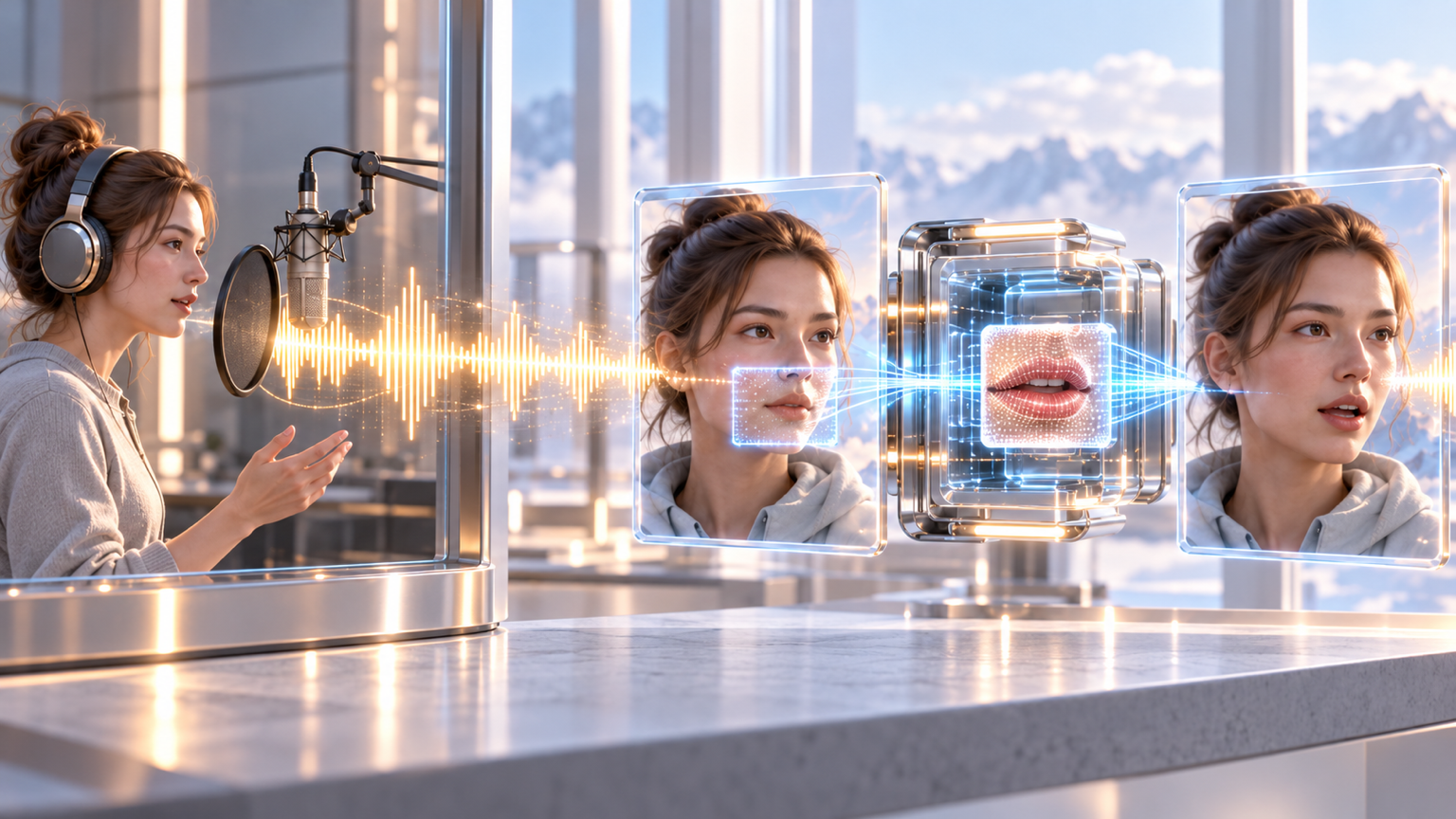
On 9 September 2026, Amazon rolled out AI lip-sync for dubbed content on Prime Video, starting with the English dub of the German series Maxton Hall. Seasons one and two carry it globally. The third and final season will include it on 9 December. Amazon says it plans to expand to more titles, and has not named them or the tools.
How the picture changes
The approach is often called visual dubbing, or vubbing. Human actors record the dialogue in the target language. The system analyses the original footage, tracks points on the performer's face, and generates new mouth shapes for the new speech. Amazon says the technology combines AI and visual effects. The voices stay human. That differs from a synthetic voice track, and from creator tools: Meta and YouTube offer AI dubbing, and YouTube is piloting lip-sync, largely on creator videos rather than scripted drama.
Where it came from
In 2025, Prime Video tested AI-aided dubbing on twelve titles in English and Spanish. The Verge's account of the September launch points back to that test. Trade coverage has also cited Flawless's 2025 visual dub of the Swedish film Watch the Skies as an early feature example. One commentary repeats claims that AI dubbing can cut localisation costs by as much as 90 percent and compress months of work into days. Treat that figure as vendor-side.
The mouth did something it never did on set
Traditional dubbing leaves the picture alone. Visual dubbing changes it. The technique sits closer to a performance alteration than to an audio layback, which is why consent comes up. Amazon's announcement stresses creative oversight and does not set out a performer-consent process. Commentary on the launch noted the same gap, while describing Amazon's localisation standards as asking productions to document and disclose AI contributions to an asset. SAG-AFTRA's contract language on digital replicas and alterations is likely to be tested on this kind of use.
What post teams will be asked for
Localisation is becoming a picture workflow as well as a sound workflow. Delivery specs may start asking for a picture version per language, clean plates of faces, and an approval trail for the altered performance. Keep those files with the project. Viewers have disliked mismatched dubs for a long time, and this removes a real friction by changing an actor's image. Consent, credit, and disclosure are the terms that practice will be judged on.
More from the blog
- Suggestive Editing Arrives: Story-Aware Rough Cuts Move Into the Mainstream
From Eddie AI's story-structured assemblies at NAB 2026 to Premiere's AI Assistant and Resolve 21 search, editing tools are proposing the cut, not only cleaning the footage.
- Synthetic Performers and the New Line: Contracts, Oscars, and a Famous Non-Actor
SAG-AFTRA's 2026 value test, the Academy's human-performance rule for the 99th Oscars, and the debate around AI actor Tilly Norwood mark where synthetic performance now sits.