News
Hollywood Bets on AI While Audiences Say "Disclose It": What Katzenberg, Cruise and the Surveys Add Up To
· RenderBob team
In September, Katzenberg announced an AI animation push and Tom Cruise said people want to see real things. Surveys show more acceptance of AI effects than of an AI lead, and most want to be told.
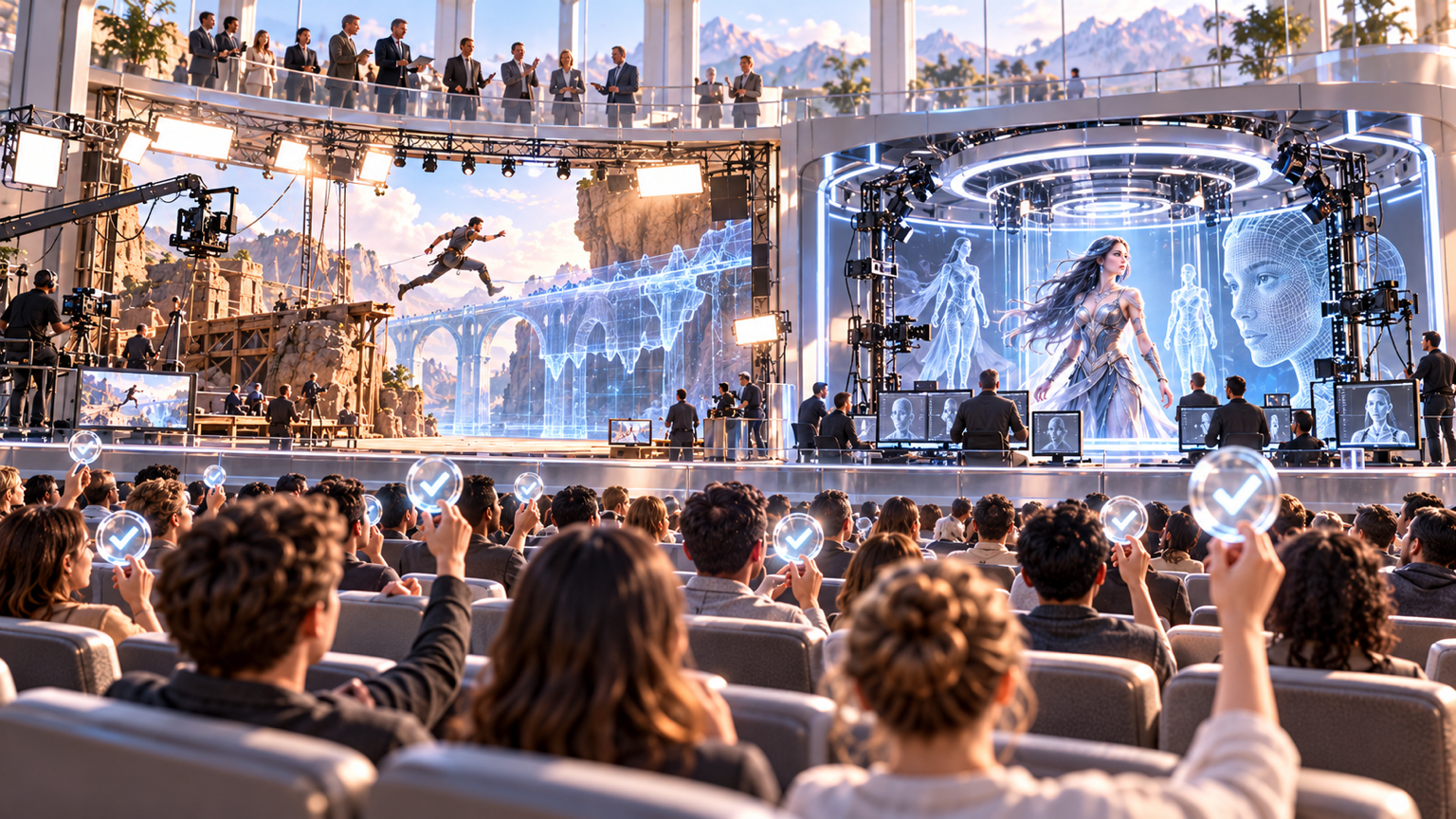
In the space of a week in September, Jeffrey Katzenberg announced an AI animation push and Tom Cruise said "people want to see real things". The surveys we have point to a middle: audiences are more accepting of AI in effects than in the lead, and most want to be told.
Katzenberg
TheWrap reported on 25 September that Katzenberg plans to make animated features and television with generative AI, through either "a digital platform or an actual studio". No name, funding, or partners are in that interview. He is quoted as saying, "Up until recently it was slop. It didn't hold any interest for me," and that he is "fired up" to show what is possible. He argues that if costs and barriers come down, more films will get made and new forms will emerge. Talent, he says, is the hard part.
Cruise
Speaking on 21 September at a BAFTA "Life in Pictures" event in London, Cruise gave an impromptu answer on AI that TheWrap describes as six minutes. TheWrap quotes him as saying "There is nothing like human", that AI use in film "is coming, and it's going to happen", and that "people want to see real things". Both positions can be true at once.
The audience data
A blog post by the software company Filmustage, dated 28 September, collects survey results. We have not opened the NRG report itself. Media Play News reports the Hub figure separately:
- An NRG and TheWrap Pro survey of 3,500 people, cited by Filmustage from November 2025: 64% found an AI lead unacceptable, while 62% accepted AI for special effects and colour work.
- A Hub Entertainment Research survey of 2,500 US consumers from November 2025: 72% wanted AI use disclosed every time. Media Play News reports the same figure from that survey.
Filmustage also says searches for phrases such as "movies with no AI" and "human made film" rose in the weeks before its post, and presents the rise as a direction. A Korean outlet quoted bigger percentages from the same analysis, but the post itself does not carry them, so we do not repeat them.
Disclose, with specifics
The strongest number in the data is the desire for disclosure. Say which parts used AI, as Danny Boyle did for Ink.
Know where audiences draw the line
Effects and backgrounds are accepted more readily than a synthetic lead. The NRG split above is the evidence Filmustage is using.
Keep human authorship visible
Utopai's account of comments by COO Kevin Chong says performance and the key creative decisions still have to come from people, and that the studio does not treat AI as a replacement for actors. That echoes our Cortés piece.
Treat surveys as dated
The two surveys are from November 2025 and predate this autumn's releases.
What to watch
Fresh polling after the Gods Don't Give Gifts release, what Katzenberg's venture is called and who funds it, and whether festivals and platforms start asking for disclosure in a standard form.
More from the blog
- A Three-Minute AI Trailer Wins the Future Vision XPRIZE and a Path to a Feature
The Gifted, a trailer credited to Jeff Synthesized, won the Future Vision XPRIZE from more than 2,500 entries. The prize includes $2.5 million toward a feature, with Google and Range Media Partners attached.
- Grok Voice 3.0: A 0.81-Second Speech-to-Speech Model at $0.08 a Minute, and How to Read the Benchmarks
xAI released Grok Voice 3.0, a speech-to-speech model for voice agents, at the same $0.08 a minute as its predecessor. It leads one independent index, and trails on other measures.