News
Sound and Picture in One Pass: Kandinsky 6.0 and the Open Audio-Video Wave
· RenderBob team
Kandinsky 6.0 Video is an MIT-licensed model that generates five-second clips with synchronised 44 kHz audio and lip-sync in one pass. Confirm the model card.
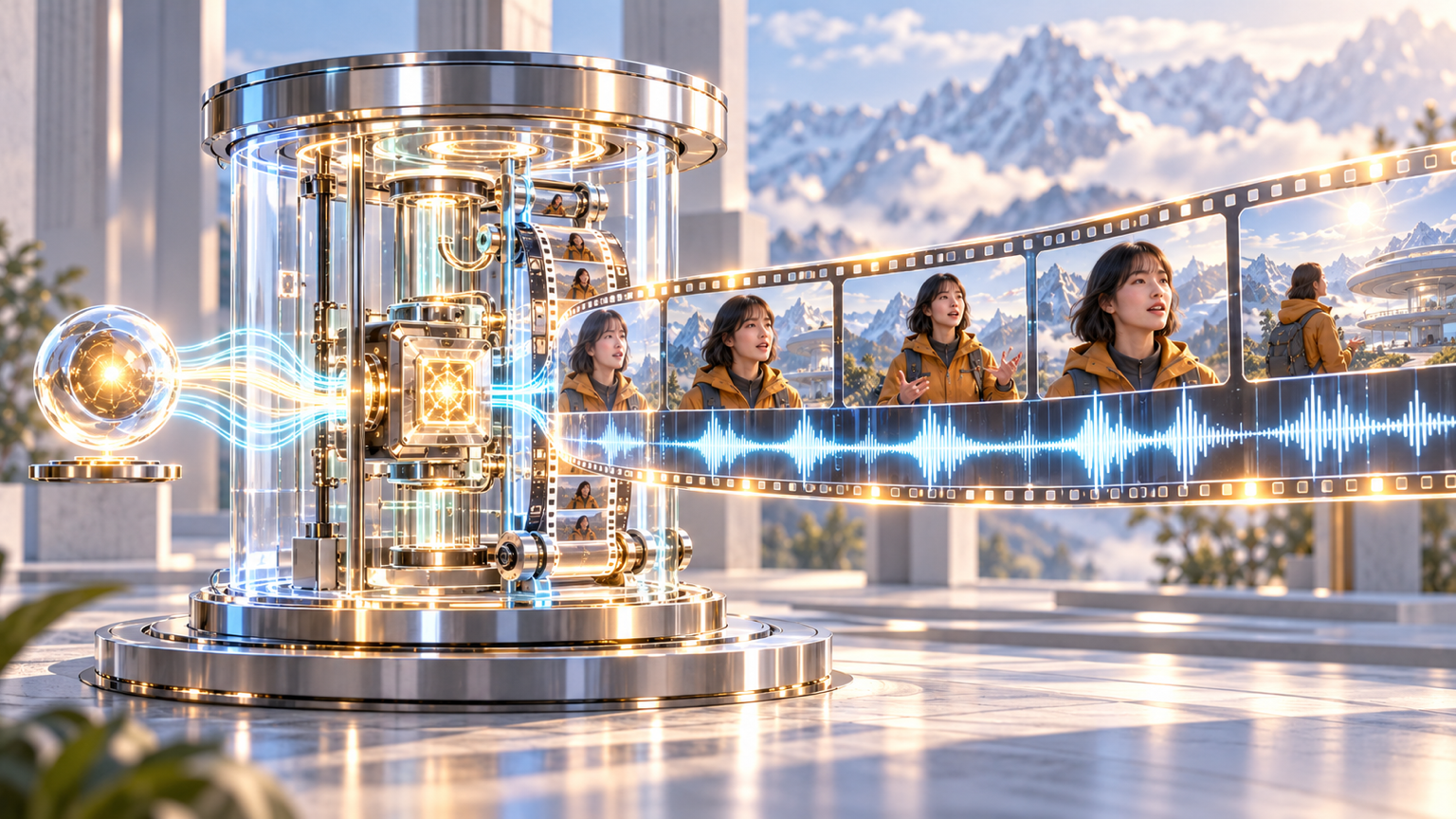
A 10 October open-model roundup highlighted a theme of the week: joint audio-video generation. New models create picture and sound together, instead of producing silent video and adding sound in a separate step.
What is new
Kandinsky Lab open-sourced Kandinsky 6.0 Video under the MIT licence. It comes in a 29-billion-parameter Pro version and a 3-billion-parameter Lite version, generating five-second clips with synchronised 44 kHz audio, including lip-sync, in one pass. It supports text-to-audio-video and image-to-audio-video modes, and a separate super-resolution plug-in raises output to Full HD. Tencent Hunyuan, with Fudan and Zhejiang universities, released Prism, an MIT-licensed framework for natively training joint video-audio models at 2K. It is described as a research preview for heavy GPUs. On the efficiency side, the same roundup notes FastH3 Trim for running MiniMax H3 video on 8 GB graphics cards.
These specifications come from a single 10 October aggregator roundup. Confirm licence terms, clip length, and hardware requirements on the model cards before relying on them.
Commercial models are moving the same way
Wan 3.0 generates dialogue, music, ambience, and effects alongside the picture. FLUX 3 Video includes native audio. Kling's upcoming release is announced with stereo sound. Joint generation has gone from a differentiator to something buyers expect.
Why editors should care
When sound and image are produced together, footsteps land on the right frames and mouths match words without a separate sync pass. For missing B-roll, an atmospheric clip can arrive with its ambience already in place. For dialogue, lip-sync from the model can reduce repair work, though it still needs a listen.
What an open model is worth
An MIT licence allows commercial use, local running, and fine-tuning, which suits confidential projects and studios that want control over versions. The Lite model's 3-billion-parameter size is in the range that desktop and laptop setups can plausibly target. Nobody should assume performance on specific hardware without testing. Five-second clips are short, so these are building blocks, not scenes.
Limits
Open models often trail commercial leaders on the longest, highest-resolution output. Joint models can make it harder to isolate or replace one track. Check that you can separate dialogue from music and effects when the mix needs it.
What to watch
Whether open models gain longer durations, and whether separate stems for dialogue, effects, and music become a standard output. Editors need the stems for mixing.
More from the blog
- Higgsfield Says AI Video Now Runs Past 10 Minutes: What an OpenAI Customer Story Does and Doesn't Show
An OpenAI customer story from 13 October says Higgsfield can now produce AI video longer than 10 minutes using GPT-6 Astra. The claims are the company's, and no independent test has been published.
- Disney Bids $20 Million for a License to Character.AI's IP: What the Stalking-Horse Deal Does and Doesn't Say
Character.AI filed for Chapter 11 on 12 October, and Disney Worldwide Services is the opening bidder at $20 million for a non-exclusive, perpetual licence. Higher bids can still come in.