News
An AI Rapper Who Looks Like a Real One: What the IAMDDB Dispute Shows About Likeness, References and Proof
· RenderBob team
A rapper says an AI-generated performer in a video from official Israeli government accounts resembled her, and that she never consented. The video was taken down.
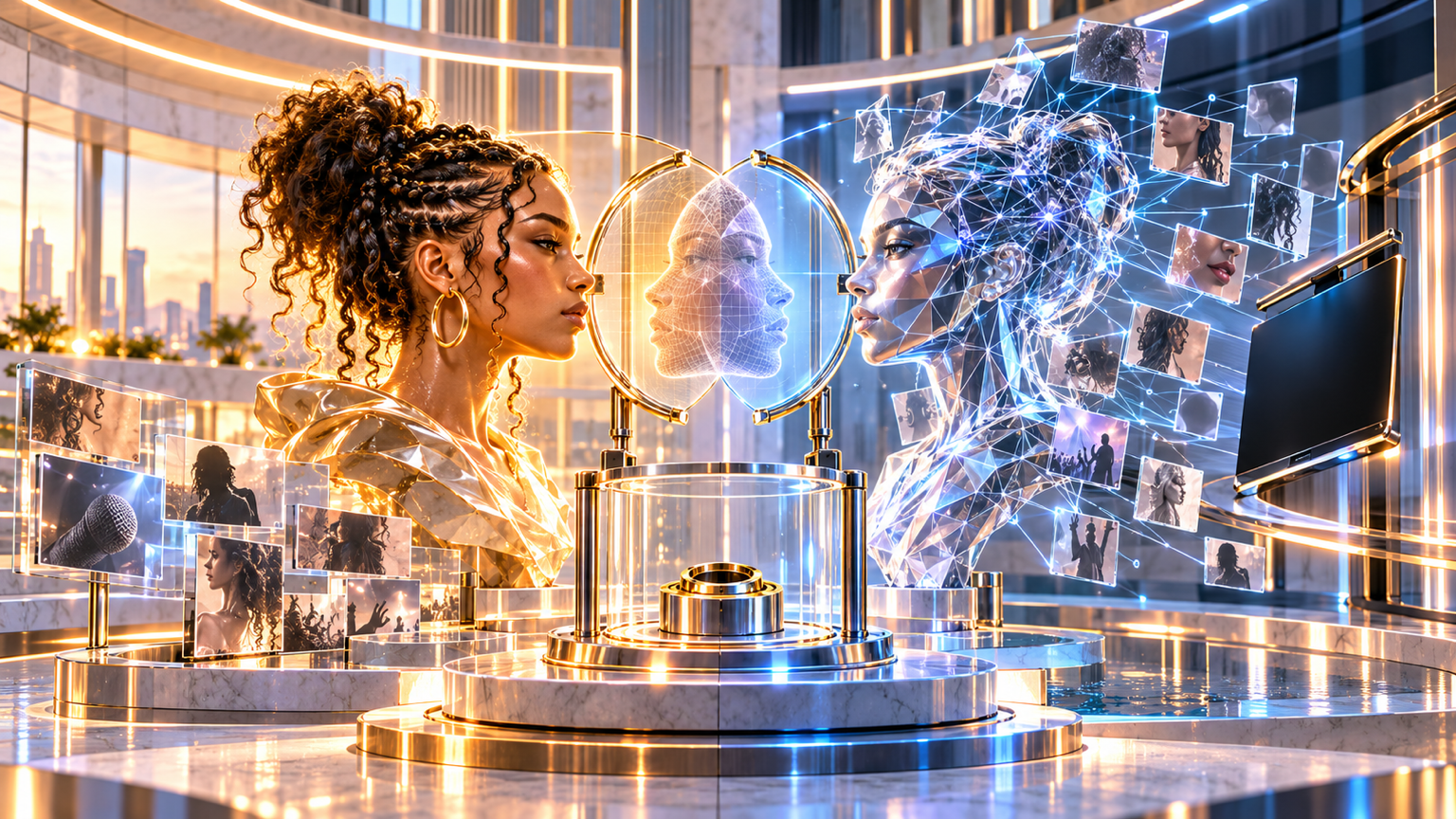
A rapper says an AI-generated performer in a video from official Israeli government accounts resembled her, and that she never consented. The video was taken down. The politics are outside this blog's scope; the likeness question applies to anyone who commissions or makes AI characters.
What was reported
According to IBTimes UK, an AI-generated rap video was shared around 15 October. It showed a digitally generated performer with braids who resembled IAMDDB, a Manchester-based rapper. New York artist Rafael Shimunov compared the character with a January 2018 photograph of her from Crack magazine and noted similarities in braids, clothing and pose, and altered brand logos on the clothing. On 16 October she asked on X why her identity had been used for something she "100% did not consent to". In a later statement, quoted by Euronews, she said she did not "authorise, approve, participate in or consent to" the use of her image. She said she was seeking advice on steps to protect her image, work and rights.
The video was deleted from the official accounts after her objection. Euronews and IBTimes report no confirmed legal action as of 21 October.
What the creator said
IBTimes reports that the video was made by Eyal Ben Moshe, who works as Eyal Be, a New Jersey-based director. It says he stated that he did not know who IAMDDB was, did not intentionally use her image, and could not identify which photographs the system may have drawn on. Euronews, in the version we read, reports no response from the government or from him. The two accounts differ on that point.
What is and is not established
Resemblance is documented in the reports: the pose, clothing and styling were compared with a published photograph. What is not established is how the character was produced, including whether her photo was supplied as a reference. IBTimes says that explicitly. The reports show a dispute over likeness, not a finding.
What this means for a maker
- Resemblance can cause harm even without a reference. A character that looks like a real person invites the same complaint, whatever the process.
- Keep a reference log. If you can show what a character was conditioned on, you can answer the question. The creator here said he could not.
- Check key characters before release. A reverse-image search on a main character's face and outfit takes minutes.
- Commissioners share the risk. The people who publish a video are named in the story, not only the person who made it.
- Deletion is not resolution. The clip was removed, and the dispute continued.
- Real performers need written consent. That includes lookalike designs built to evoke them.
What to watch
Whether IAMDDB takes legal action, whether the creator or the accounts say more about how the character was made, and whether platforms add checks for lookalikes.
RenderBob 3 and this story
RenderBob 3 keeps references with the studio and prompt logs beside each generated clip, so when someone asks what a character was conditioned on, there is a record to show, not a guess.
More from the blog
- China's First All-AI Feature Opens to Weak Ticket Sales: What the Reported Numbers Say About Paying Audiences
Sanxingdui: Future Past, from Bona Film Group, opened in Chinese cinemas on 23 October. Wire reports describe presales of 80,000 yuan and a forecast box office below 150,000 yuan.
- Hugging Face's CEO Says Netflix's AI Documentary Went "Full Doomer Mode": What He Disputes and What the Sources Don't Settle
Clément Delangue, who appears in Netflix's Instadocs: AI Gone Wild, has criticised how the film tells the July attack on his company. The reports carry his side, and no reply from Netflix.